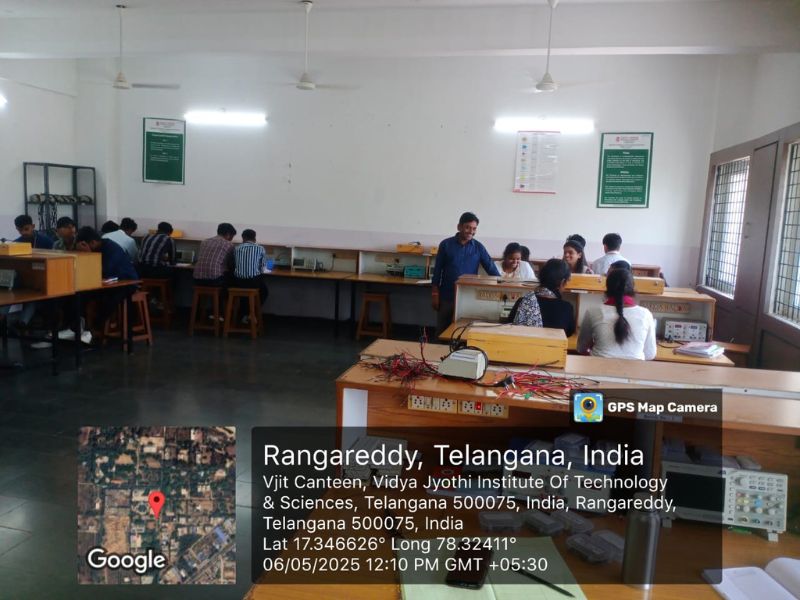
Infrastructure
Infrastructure
The Department of Electronics & Communication Engineering has started its UG Program B.Tech(ECE)from the year 1999 with an intake of 40. At present the department has expanded to 240. M.Tech(ECE) was started in the year 2011 with an intake of 18. B.Tech(ECE) program first accredited by NBA in 2011. Later B.Tech(ECE) reaccredited in 2018. Presently the program is accredited by NBA under Tier-1 from 2022 for a period of three years. The Department of ECE is a center for activities, offering students the chance to actively participate in learning through workshops, seminars, certification programs, Hackathons, tech-fests, and research and development projects. The department provides a number of Technical Clubs to help students learn on their own and raise their knowledge levels. The department focuses on helping students to develop, improve, and expand the foundations of electronics and communication engineering in order to increase society’s intellectual capital. Year after year, 80% of our students have been placed. It makes every effort to produce seasoned engineers. A team of knowledgeable instructors, a hands-on learning method, and an emphasis on research have made the department known as one of the best for Electronics and Communication Engineering.
Laboratories
Analog and Digital Communications Laboratory
Description:
The Analog and Digital Communications Laboratory is designed to provide practical exposure to the fundamental principles and implementation aspects of modern communication systems. This laboratory bridges the gap between theoretical concepts and real-time hardware/simulation-based experimentation in analog and digital modulation techniques. Students perform experiments involving amplitude modulation (AM), DSB-SC, SSB, frequency modulation (FM), pulse modulation techniques such as PAM, PCM, and Delta Modulation, as well as digital modulation schemes including PSK, FSK, DPSK, and QPSK. The laboratory also includes verification of the Sampling Theorem and the study of pre-emphasis and de-emphasis techniques used in noise reduction.
Outcome of the Lab:
At the end of the semester, students will be able to design, implement, analyze, and compare analog and digital communication systems by performing modulation and demodulation techniques, evaluating system performance in terms of bandwidth, power efficiency.
Antennas Laboratory
Description:
The Antenna and Wave Propagation Laboratory provides practical exposure to the measurement, analysis, and design of various antenna systems used in modern wireless communication. The laboratory focuses on understanding antenna radiation characteristics, performance parameters, and array configurations through experimental measurement and simulation techniques.Students perform experiments on different types of antennas such as Half-Wave Dipole, Monopole, Loop (small and large), Helical, Yagi-Uda, Folded Dipole, and antenna arrays including 2-element, N-element linear arrays, 2×2 Helical arrays, and 3×3 Dipole arrays. Advanced experiments include design and simulation of Crossed Yagi antennas and Planar Reflector antennas.
Outcome of the Lab:
At the end of the semester, students will be able to measure and evaluate key antenna parameters using experimental techniques also analyze and compare different radiation patterns and antenna characteristics. Design and simulate single-element and array antennas for specific applications.
Basic Simulation Laboratory
Description:
The Basic Simulation Laboratory is designed to provide practical exposure to the fundamental concepts of Signals and Systems through computational modeling and simulation using MATLAB. The laboratory bridges theoretical understanding with hands-on implementation, enabling students to analyze, visualize, and interpret signal behavior in both time and frequency domains. Students perform experiments involving generation of continuous-time and discrete-time signals, signal operations (addition, scaling, shifting, folding), and computation of energy and power. The laboratory also covers convolution, correlation (auto and cross), verification of linearity and time-invariance properties, Gibbs phenomenon, Fourier and Laplace transforms, pole-zero analysis in S-plane and Z-plane, statistical analysis of Gaussian noise, and verification of the Sampling Theorem.
Outcome of the Lab:
At the end of the semester, students will be able to model, simulate, and analyze signals and systems using MATLAB by applying signal operations, transforms, convolution, correlation, and statistical analysis techniques. Students will gain the ability to validate system properties, interpret frequency-domain representations, analyze noise characteristics, verify sampling theorem, and evaluate poles and zeros of transfer functions in both continuous and discrete domains.
Digital Logic Design Laboratory
Description:
The Digital Logic Design Laboratory provides hands-on experience in the design and implementation of fundamental digital circuits using basic and universal logic gates. The laboratory emphasizes practical realization of combinational and sequential circuits, enabling students to translate Boolean expressions and logic designs into hardware implementations.Students perform experiments involving the design of logic gates using NAND and NOR gates, realization of Boolean functions, design of full adders and subtractors, implementation of MSI combinational circuits such as multiplexers, decoders, comparators, and code converters. The laboratory also covers sequential circuit design including flip-flops, counters, and universal shift registers.
Outcome of the Lab:
At the end of the semester, students will be able to design, implement, and verify combinational and sequential digital circuits using logic gates and flip-flops, analyze circuit behavior through truth tables and timing diagrams, and develop the ability to construct fundamental building blocks of digital systems. Students will also acquire practical skills in hardware implementation, circuit testing, and troubleshooting, preparing them for advanced digital system design and real-world engineering applications.
Digital Signal Processing Laboratory
Description:
The Digital Signal Processing (DSP) Laboratory is designed to provide practical exposure to the analysis and implementation of digital signal processing techniques using MATLAB. This laboratory enables students to bridge theoretical DSP concepts with simulation-based experimentation and algorithm development.Students perform experiments involving generation of discrete-time signals using recursive difference equations, computation of DFT/IDFT and FFT, determination of power spectrum, and evaluation of system frequency responses. The laboratory also covers the design and implementation of digital filters including FIR filters using window techniques and IIR filters such as Butterworth and Chebyshev filters. Advanced experiments include multirate signal processing techniques such as decimation, interpolation, and sampling rate conversion, generation of narrowband signals through filtering, DTMF signal generation, and analysis of step and ramp responses of first- and second-order systems.
Outcome of the Lab:
Students will be able to design, simulate, and analyze digital signal processing systems using MATLAB by implementing time-domain and frequency-domain operations, developing FIR and IIR filters, evaluating system frequency responses, and applying multirate signal processing techniques.
Electronics Circuit Analysis Laboratory
Description:
The Electronics Circuit Analysis Laboratory is designed to provide practical exposure to the design, implementation, and performance evaluation of analog electronic circuits. The laboratory focuses on power amplifiers, tuned amplifiers, multivibrators, sweep circuits, Schmitt triggers, and sampling gates using Bipolar Junction Transistors (BJTs).Students perform experiments on various classes of power amplifiers including transformer-coupled Class A, Class B, complementary symmetry push-pull, and Class C amplifiers. They observe input and output waveforms, analyze distortion, and calculate amplifier efficiency. The laboratory also includes the design of single tuned amplifiers and practical determination of the Quality Factor (Q) of tuned circuits.Further, students design and analyze bistable, astable, and monostable multivibrators, bootstrap and Miller sweep circuits, and study the operation of Schmitt trigger circuits under different gain conditions. Sampling gate circuits (unidirectional and bidirectional) are also implemented to understand signal control techniques.
Outcome of the Lab:
Students will be able to design, construct, and analyze power amplifiers, tuned amplifiers, multivibrators, sweep circuits, Schmitt triggers, and sampling gates; evaluate their performance through waveform observation and efficiency/Q-factor calculations; and correlate practical results with theoretical analysis. Students will also gain hands-on experience in measurement techniques and troubleshooting of analog electronic circuits, preparing them for advanced studies and industry applications in communication and electronic system design.
Electronic Devices and Analog Circuits Laboratory
Description:
The Electronic Devices and Analog Circuits Laboratory is designed to provide practical understanding of semiconductor devices and fundamental analog circuit applications. The laboratory enables students to experimentally verify the characteristics of diodes, transistors, FETs, UJT, rectifiers, amplifiers, and oscillator circuits. Students conduct experiments to study forward and reverse bias characteristics of PN junction diodes, Zener diode characteristics, and analyze half-wave and full-wave rectifiers with and without filters, including ripple factor and voltage regulation. The laboratory also includes input and output characteristics of BJT in CE configuration, FET characteristics, and UJT characteristics. Further, students analyze clipper and clamper circuits, frequency response of CE and Common Source amplifiers, two-stage RC coupled amplifiers, and design RC phase shift oscillators. Emphasis is given to waveform observation, frequency response plotting, gain calculation, and performance analysis using laboratory instruments such as CRO/DSO, function generators, and regulated power supplies.
Outcome of the Lab:
Students will be able to design, experimentally analyze semiconductor devices, evaluate rectifier and amplifier performance, design basic oscillator circuits, interpret frequency response characteristics, and correlate practical observations with theoretical concepts of analog electronics. Students will also gain hands-on skills in circuit construction, measurement techniques, waveform analysis, and troubleshooting of electronic circuits.
Embedded System Design Laboratory
Description:
The Embedded System Design Laboratory provides practical exposure to embedded system development using ARM Cortex M0+ based FRDM development boards and Arduino simulation platforms. The laboratory focuses on programming, peripheral interfacing, sensor integration, and system-level embedded application design. Students gain hands-on experience in coding the ARM Cortex M0+ instruction set and understanding the architecture of the FRDM development board. Experiments include LED interfacing, PWM-based LED intensity control, color mixing, accelerometer interfacing, and touch sensor applications using the FRDM kit.Additionally, the laboratory incorporates simulation-based experiments using Arduino and Tinkercad, enabling students to model and test embedded applications virtually. These include interfacing potentiometers, servo motors, ultrasonic sensors, LDRs, and LCD modules using both I2C (2-wire) and SPI communication protocols.
Outcome of the Lab:
Students will be able to develop and implement embedded applications using ARM Cortex M0+ processors and Arduino platforms; interface sensors and peripherals using standard communication protocols; simulate embedded systems using Tinkercad; and design basic real-time embedded solutions for practical applications. Students will also acquire the ability to integrate hardware and software components to formulate functional embedded system designs.
Linear IC Applications Laboratory
Description:
The Linear IC Applications Laboratory is designed to provide practical knowledge of operational amplifiers, timer ICs, phase-locked loops, voltage regulators, and data converters. The laboratory focuses on the design, analysis, and performance evaluation of linear integrated circuit applications using IC 741, IC 555, IC 565, and IC 723.Students perform experiments on op-amp based circuits including adders, subtractors, integrators, differentiators, active filters (LPF and HPF), oscillators (RC phase shift and Wien-bridge), triangular wave generators, and multivibrators. The laboratory also covers timer-based astable and monostable circuits using IC 555, digital-to-analog converters (Weighted resistor DAC and R-2R ladder DAC), PLL characteristics using IC 565, and voltage regulation using IC 723.
Outcome of the Lab:
Students able to design, implement, and analyze various linear IC circuits including op-amp applications, oscillators, timers, PLL systems, voltage regulators, and DACs; evaluate their performance through waveform analysis; and correlate practical results with theoretical concepts of linear integrated circuits. Students will also develop competence in hardware implementation, measurement techniques, and performance analysis of analog integrated circuit systems.
Micro Processors and Micro Controllers Laboratory
Description:
The Microprocessors and Microcontrollers Laboratory provides practical exposure to assembly language programming and hardware interfacing using 8086 microprocessor and 8051 microcontroller. The laboratory focuses on developing low-level programming skills and understanding the interaction between hardware and software in embedded systems. Students gain hands-on experience with MASM programming environment and implement arithmetic, logical, string manipulation, sorting, and searching programs using 8086 instruction set. The laboratory also includes interfacing experiments such as stepper motor control, ADC and DAC interfacing, serial communication using 8255, and DMA data transfer using 8237/8257 controllers. In addition, students develop assembly language programs for 8051 microcontroller covering arithmetic and bit manipulation instructions, timers/counters, interrupt handling, UART communication, and LCD interfacing.
Outcome of the Lab:
Students able to develop and execute assembly language programs for 8086 microprocessor and 8051 microcontroller, interface peripheral devices for simple embedded applications, implement timer, interrupt, and serial communication routines, and integrate hardware and software components to build functional prototype systems. Students will also gain practical skills in debugging, interfacing, and real-time embedded system development.
Microwave and Optical Communications Laboratory
Description:
The Microwave and Optical Communications Laboratory is designed to provide practical exposure to microwave engineering concepts and optical communication systems. The laboratory enables students to study the characteristics of microwave sources, analyze waveguide components, evaluate scattering parameters, and understand optical fiber communication principles.In the microwave section, students perform experiments on Reflex Klystron and Gunn Diode characteristics to understand microwave signal generation. They measure key parameters such as VSWR, attenuation, and waveguide characteristics. The laboratory also includes the evaluation of scattering parameters (S-parameters) of multi-port microwave devices such as Magic Tee and Circulator, and analysis of directional coupler performance. In the optical communication section, students characterize optical sources such as LED and Laser Diode, measure numerical aperture of optical fiber, determine fiber losses, and analyze intensity modulation in analog optical links. They also measure data rate in digital optical communication systems to understand bandwidth and transmission performance.
Outcome of the Lab:
Students will analyze the characteristics of microwave sources and components, measure important microwave parameters including VSWR and S-parameters, evaluate optical source performance, determine fiber losses and numerical aperture, and analyze analog and digital optical communication links based on experimental observations. Students will also gain hands-on experience in high-frequency measurement techniques and optical communication system analysis, preparing them for advanced studies and industry applications in RF, microwave, and fiber optic communications.
VLSI Laboratory
Description:
The VLSI Laboratory is designed to provide hands-on experience in digital system design using Verilog Hardware Description Language (HDL) and FPGA-based implementation. The laboratory focuses on modeling, simulation, synthesis, and verification of combinational and sequential digital circuits using modern Electronic Design Automation (EDA) tools.Students learn the fundamentals of Verilog HDL including structural, dataflow, and behavioral modeling styles. Experiments include the design and verification of basic logic gates, verification of DeMorgan’s laws, and implementation of combinational circuits such as multiplexers, demultiplexers, encoders, comparators, binary-to-gray converters, and full adders.The laboratory also covers the design and analysis of sequential circuits such as flip-flops (SR, D, JK, T), ripple counters, modulo counters, shift registers, and finite state machines (FSM). Basic CMOS design concepts are introduced through the implementation of inverter circuits using PMOS and NMOS transistors.
Outcome of the Lab:
Students will be able to design, model, simulate, and implement combinational and sequential digital circuits using Verilog HDL and FPGA platforms; analyze circuit functionality through simulation waveforms; and apply VLSI design principles using modern EDA tools. Students will also gain practical experience in hardware realization and digital system development, preparing them for careers in VLSI, semiconductor design, and embedded hardware systems.
M.Tech Digital System Design with FPGAs la I-I Sem
Description:
This lab provide the tools for generating a physical representation of the integrated circuit from a high-level description. Traditionally, the designer starts with a schematic representation at a transistor or logical level, but due to the huge complexity of modern integrated circuits the trend is to use higher ones, such as in Hardware Description Languages (HDLs).Xilinx ISE is a software tool produced by Xilinx for synthesis and analysis of HDL designs.On the other hand, this lab provides the knowledge of various digital design using CMOS technology on LTSPICE software
Outcome of the Lab:
- Students can gain adequate knowledge in HDL coding while realizing logic gates.
- Students able to understand different structures of coding on different kind of adders.
- Students able to understand the clock distributions in sequential circuits.
- Students able to load the HDL program on FPGA/CPLD boards
- Students able to understand the importance of CMOS inverter
M.Tech System Design with Embedded Linux lab I-I Sem
Description: Verification of embedded system designs and interfaces in Linux environment and perform the real time environment models.
Outcome of the Lab:
- Familiarity of the embedded Linux development model.
- Write, debug, and profile applications and drivers in embedded Linux.
- Create Linux BSP for a hardware platform
M.Tech ARM Microcontroller Lab I-II Sem
Description:Design of microcontroller-based embedded systems; interfacing from hardware and software perspective; and applications, including ARM processor. This lab demonstrate the delay constraints on IDE environment.
Outcome of the Lab:
- Students able to understand the selection procedure of processors in the embedded domain.
- Expected to visualize the role of Real time Operating Systems in Embedded Systems
- Students can gain knowledge about the basic concepts of embedded systems.
- Students able to implement arithmetic operation on ARM processor.
- Students able to demonstrate time delay constraints on IDE environment.
M.Tech Embedded and IOT Sensor lab I yr-II Sem
Description:.This lab is specially designed and developed for the students to study the advanced embedded system. The lab is well equipped with keil software and having FPGA boards for embedded system development. The lab gives hand on experience on embedded system development and how to debug and prototype. This lab provides resources to build real time embedded system and working with various protocols
Outcome of the Lab:
- Students able to understand the selection procedure of processors in the embedded domain.
- Expected to visualize the role of Real time Operating Systemin Embedded Systems
- Students can gain knowledge about the basic concepts of embedded systems.
- Students able to understand interfacing programs
- Students can design combinational and sequential circuits on FPGA boards.
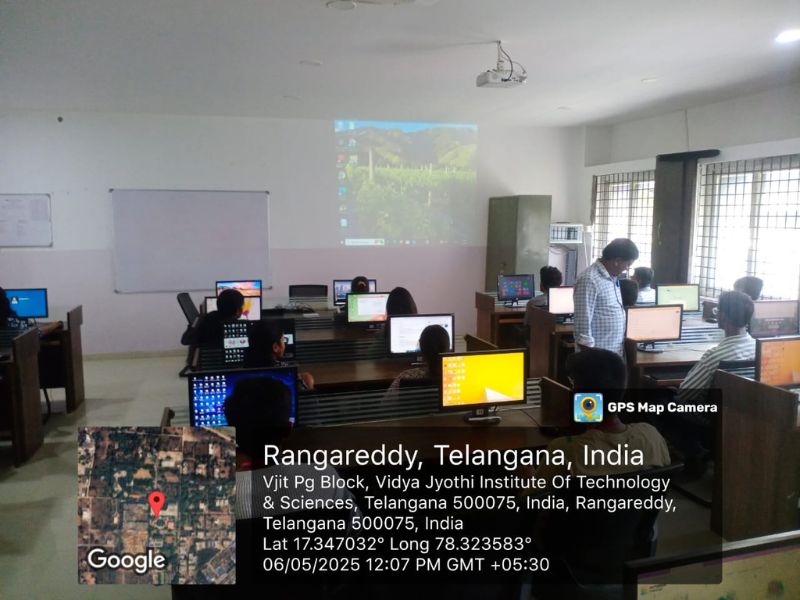
Embedded System Design Lab
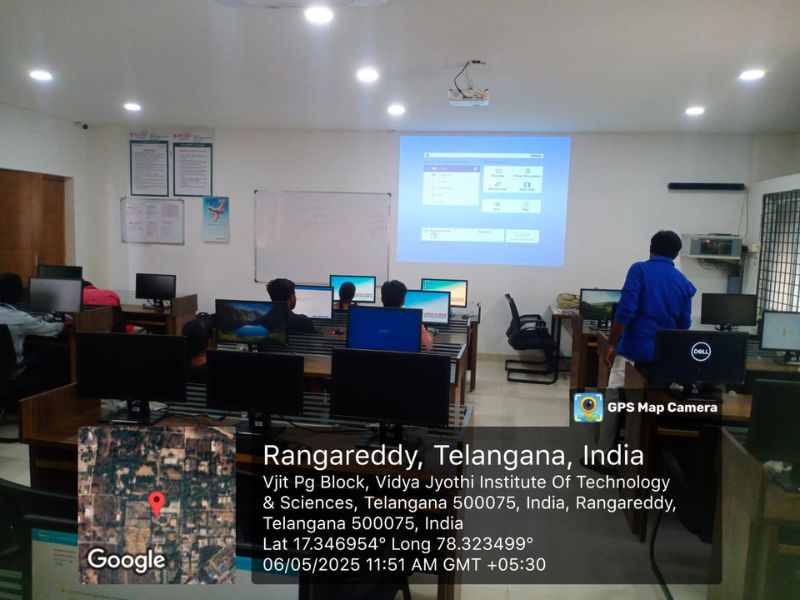
Basic Simulation Lab
Antenna Lab
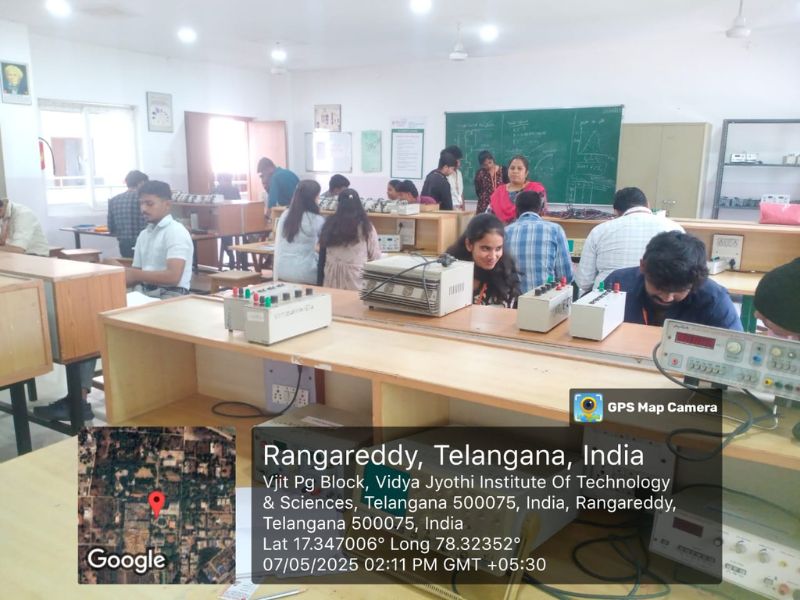
Electronic Devices & Analog Circuits Lab
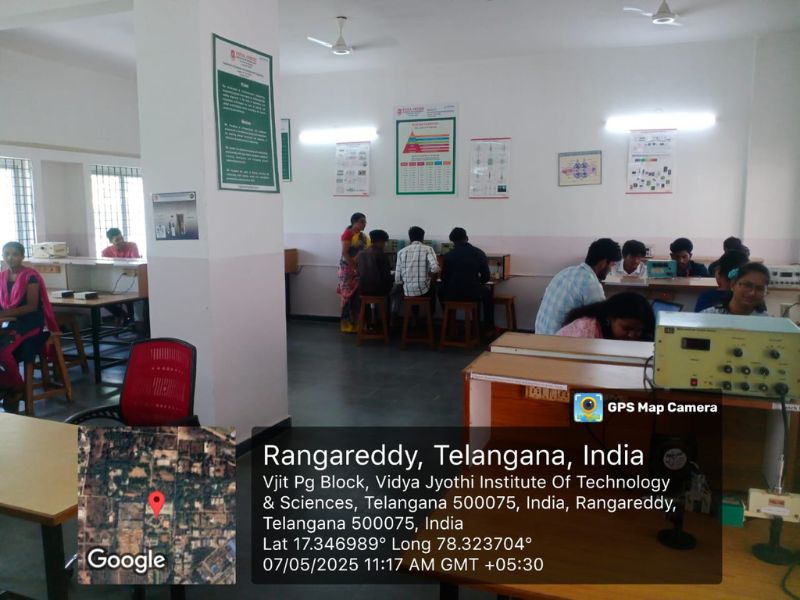
Microwave & Optical Communication Lab
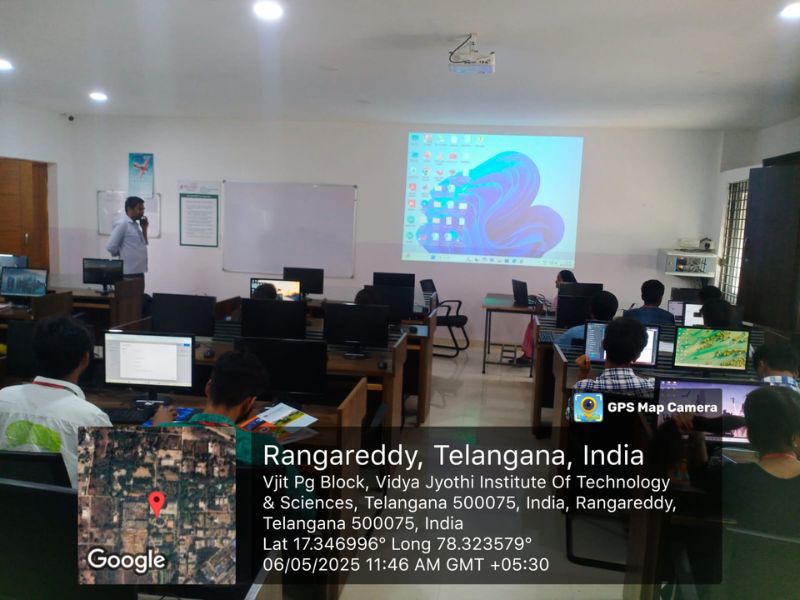
Microprocessor & Microcontroller Lab
VLSI Lab
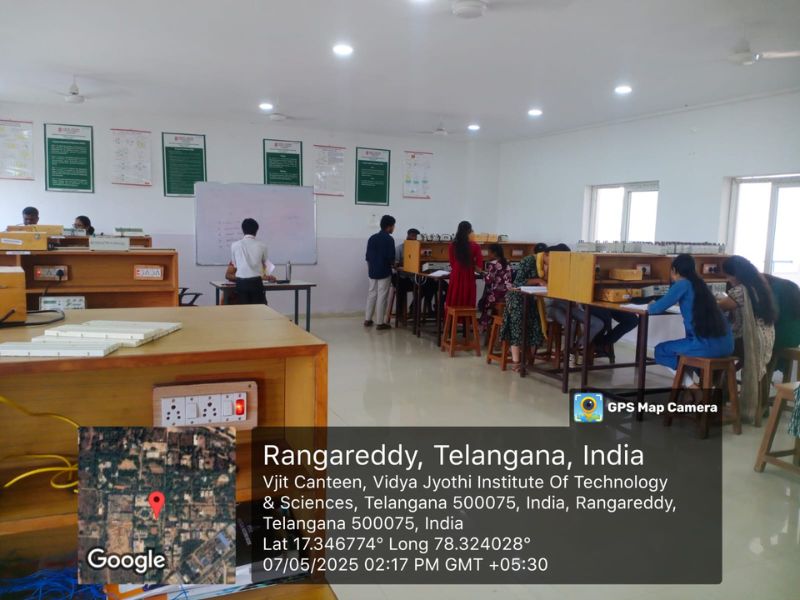
ADC lab
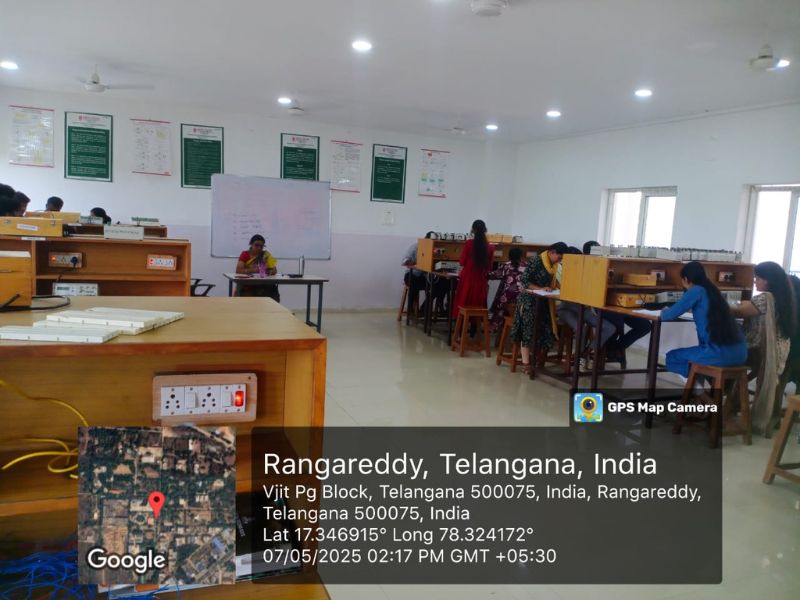
Digital Logic Design & ECA Lab