
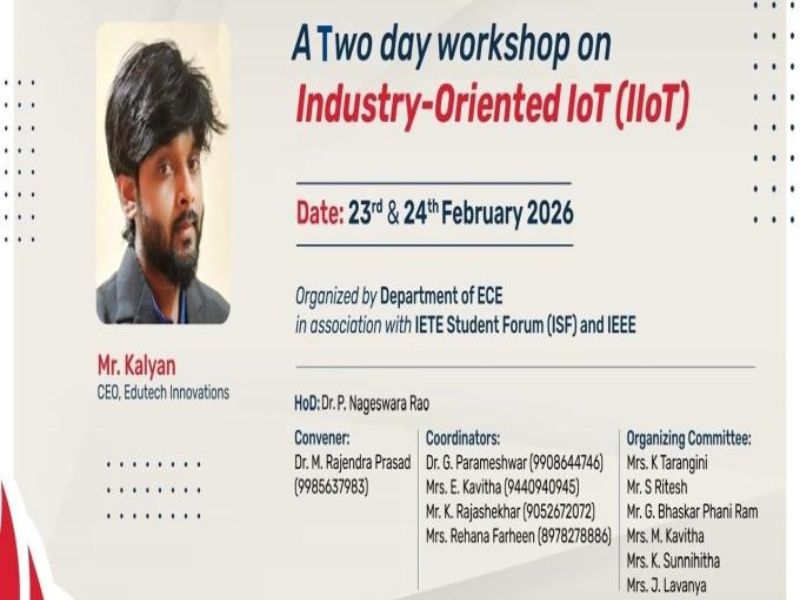
Organized by: Department of Electronics and Communication Engineering (ECE)
In Association with: IETE Student Forum (ISF)
Resource Person: Mr. Kalyan Koppisetty
Founder & CEO, Edutech Innovations
Introduction
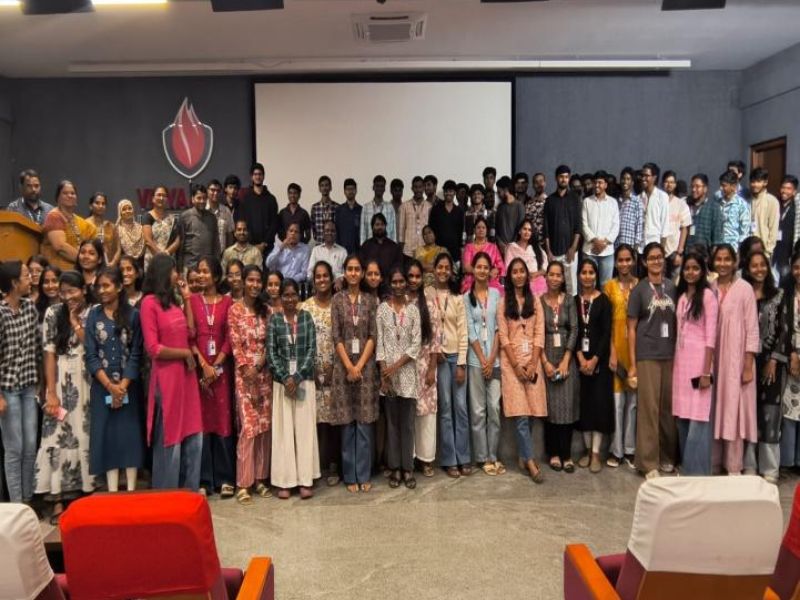
The Department of Electronics and Communication Engineering (ECE), Vidya Jyothi Institute of Technology (VJIT), in association with the IETE Student Forum (ISF), successfully organized a Two-Day Industry-Oriented Internet of Things (IIoT) Workshop on 23rd and 24th February 2026. The workshop was conducted in collaboration with Edutech Innovations with the objective of providing students with practical exposure to Industrial Internet of Things (IIoT) technologies and their real-world applications.
The program combined theoretical concepts with extensive hands-on training, enabling participants to develop industry-relevant skills using embedded hardware platforms, cloud technologies, and industrial sensing systems. Through interactive sessions and project-based learning, students gained valuable insights into modern IIoT architectures and emerging industrial automation technologies.
Objectives of the Workshop
The workshop was organized with the following objectives:
- To introduce students to Industrial Internet of Things (IIoT) architecture and deployment models.
- To provide hands-on experience with NodeMCU (ESP8266) and Raspberry Pi platforms.
- To interface industrial-grade sensors for monitoring and safety applications.
- To implement rule-based intelligence for automated industrial decision-making.
- To visualize and analyze real-time sensor data using ThingSpeak Cloud Platform.
- To design, develop, and demonstrate end-to-end Industry-Oriented IoT solutions.
Workshop Structure
The workshop was carefully structured to provide a balanced blend of conceptual learning and practical implementation. Expert lectures were complemented by laboratory sessions, allowing participants to apply theoretical concepts through real-time hardware programming and cloud integration.
Day 1: Industrial IoT Edge Systems & Safety Sensor Integration
The first day focused on the fundamentals of Industrial IoT and edge computing technologies. Students were introduced to the architecture of industrial automation systems and learned how edge devices collect and process sensor data in real time.
The sessions covered:
- Introduction to Industrial Internet of Things (IIoT)
- Industrial IoT architecture and communication models
- Programming NodeMCU (ESP8266) for industrial applications
- Interfacing industrial safety sensors
- Real-time data acquisition and monitoring
- Edge computing concepts for industrial automation
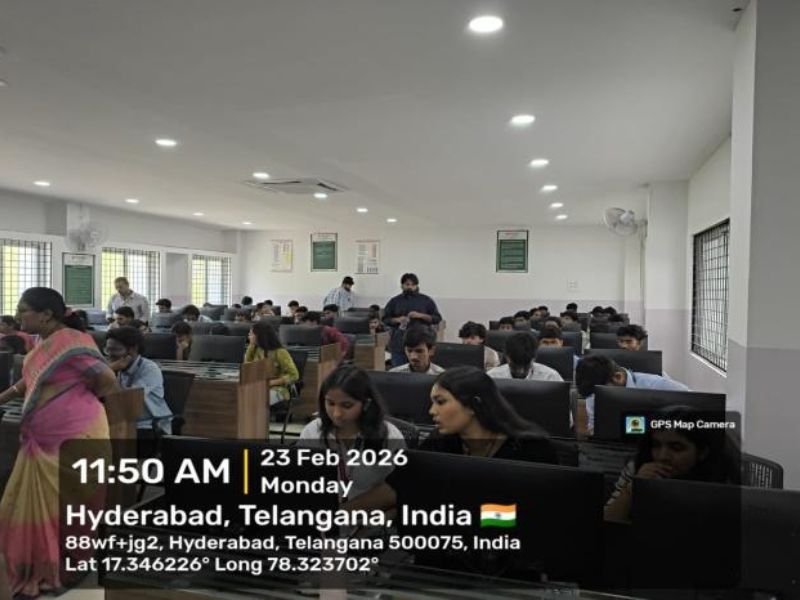
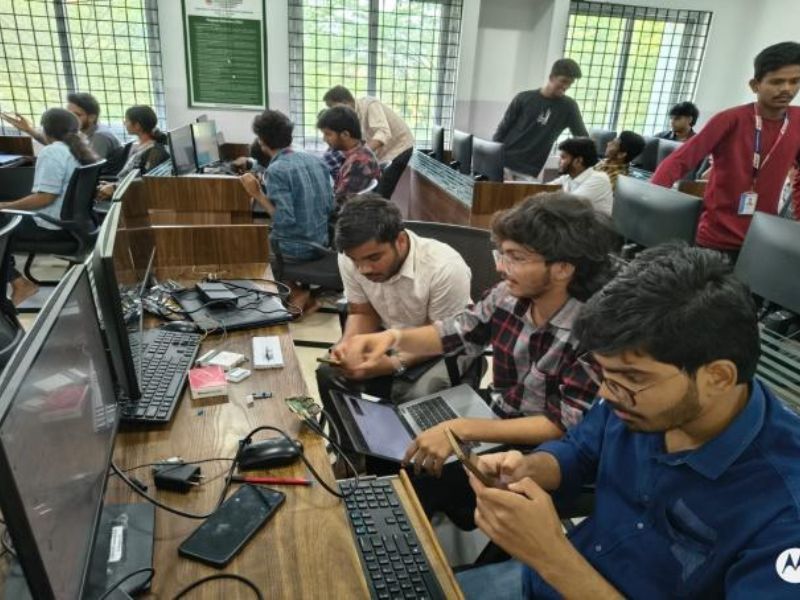
Hands-on laboratory sessions enabled participants to configure sensors, acquire real-time data, and develop embedded applications using NodeMCU.
Day 2: Industrial Gateway Systems, Cloud Analytics & Project Development
The second day focused on industrial gateway technologies, cloud connectivity, data analytics, and project implementation.
The sessions included:
- Raspberry Pi as an Industrial IoT Gateway
- Cloud integration using the ThingSpeak platform
- Real-time sensor data visualization and analytics
- Rule-based automation for industrial monitoring systems
- Development of end-to-end Industry-Oriented IoT projects
- Project demonstrations and performance evaluation
Participants successfully implemented cloud-connected monitoring systems and demonstrated practical IIoT applications using hardware and cloud platforms.
Student Participation
The workshop witnessed enthusiastic participation from students of the Department of Electronics and Communication Engineering. Throughout the two-day program, students actively engaged in hands-on experiments, collaborative learning activities, and project development sessions. The interactive nature of the workshop encouraged problem-solving, teamwork, and innovation while exposing participants to industry-standard technologies.
Learning Outcomes
Upon successful completion of the workshop, participants were able to:
- Understand Industrial Internet of Things (IIoT) architecture and deployment strategies.
- Design and explain complete IIoT system architectures.
- Program NodeMCU (ESP8266) and Raspberry Pi for real-time industrial applications.
- Interface multiple industrial sensors for safety and monitoring systems.
- Develop cloud-connected monitoring dashboards using ThingSpeak.
- Analyze and visualize real-time sensor data for industrial decision-making.
- Design, implement, and demonstrate industry-oriented IoT projects with practical relevance.
Feedback
The workshop received excellent feedback from the participants. Students appreciated the practical approach adopted throughout the program, the extensive hands-on sessions, and the opportunity to work with industry-standard hardware and cloud platforms. The project-based learning methodology significantly enhanced their understanding of Industrial IoT concepts and boosted their confidence in developing real-world automation solutions.
Conclusion
The Two-Day Industry-Oriented IoT (IIoT) Workshop successfully achieved its objective of bridging the gap between academic learning and industrial practice. The workshop equipped students with essential technical skills in embedded systems, cloud computing, industrial automation, and real-time data analytics through a combination of expert guidance and experiential learning.
The Department of Electronics and Communication Engineering extends its sincere gratitude to Mr. Kalyan Koppisetty, Founder & CEO of Edutech Innovations, for delivering an insightful and highly practical workshop. The department also thanks the institute management and the IETE Student Forum (ISF) for their continuous support in organizing such industry-focused technical programs that prepare students for careers in Industry 4.0 and Industrial IoT.








0 Comments