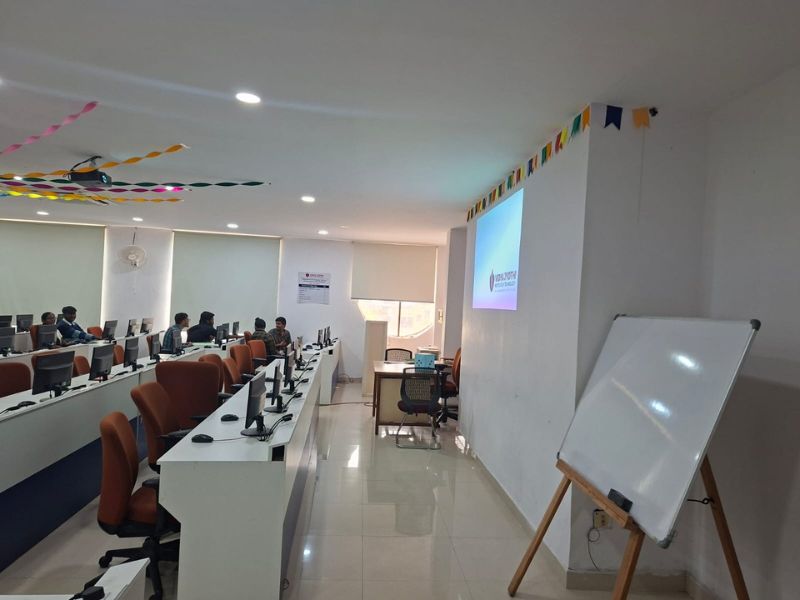
Infrastructure
Infrastructure
Key Features
- High-Performance Systems: All labs are equipped with modern desktop computers with high-speed processors (Intel i5, minimum 8–16 GB RAM, and 512 SSD storage to ensure smooth performance for data-intensive tasks.
- Software Resources: Labs are pre-installed with essential software and tools including:
- Programming IDEs (Visual Studio Code, Eclipse, NetBeans, Android Studio)
- Web Technologies (Node.js, React, Angular, MongoDB)
- Data Analytics Tools (Python, R, Anaconda, Jupyter Notebook, SPSS, Power BI)
- Big Data Frameworks (Hadoop, Hive, Pig)
- AI/ML Frameworks (TensorFlow, Keras, PyTorch)
- Database Systems (MySQL, Oracle, PostgreSQL)
- Virtualization & Networking Tools (Packet Tracer, Wireshark, VMware)
- High-Speed Internet: All labs are connected via high-speed LAN and Wi-Fi, with dedicated internet bandwidth to support cloud computing, online resources, and real-time collaboration.
- Smart Classroom Integration: Labs feature digital projectors and AV systems for effective demonstration and interactive learning.
- Backup and Security: Labs include UPS systems for uninterrupted power supply and network-level security (firewalls, antivirus, access control) for data safety and integrity.
- Support for Mini and Major Projects: Dedicated lab hours and mentoring are provided to support student mini and major projects, internships, and industry collaborations.
- Specialized Labs Include:
- Full Stack Development Lab
- Big Data Analytics Lab
- Deep Learning & AI Lab
- Network & Security Lab
- Mobile Application Development Lab
Laboratories
Data Structure Lab - II Yr-I Sem
Description:Data Structures Lab is designed to provide hands-on programming experience with essential data structures and their practical applications. The lab emphasizes the implementation of various linear and nonlinear data structures such as stacks, queues, linked lists, trees, graphs, and hash tables using the C programming language.
Outcome of the Lab: The course enables students to transition from theoretical knowledge to practical implementation, enhancing their problem-solving skills and preparing them for real-world software development and competitive programming environments.
DBMS Lab - II Yr-I Sem
Description: Description DBMS Lab is designed to introduce students to practical aspects using SQL and PL/SQL. Through a series of structured experiments, students will learn to create and manage relational databases, implement constraints, perform complex queries involving joins and views, and use procedural extensions like stored procedures, functions, and triggers. The lab also includes real-world database schema design and hands-on practice in implementing data integrity, normalization, and transaction control.
Outcome of the Lab: The course emphasizes industry-relevant skills required to interact with and manage large data systems effectively.
Skill Development Course - II Yr-I Sem
Description: This Skill Development Course is designed to introduce students to the fundamentals of Data Analysis and Visualization using R Programming. Students will learn to work with basic data structures in R such as vectors, matrices, lists, and data frames. The course covers essential programming constructs including control structures, loops, and user-defined functions. Students will also explore statistical techniques like calculating mean and median, and perform operations on factors and data frames. The lab culminates in data visualization and modeling tasks including applying regression techniques on time series and web data.
Outcome of the Lab: This course provides a strong foundation for data science, statistical analysis, and machine learning applications..
Operating Systems Lab - II Yr- II Sem
Description: The Operating Systems Lab introduces Students to the practical implementation of core concepts of Operating Systems through Programming in C. Students will simulate various CPU scheduling algorithms, memory allocation techniques, and page replacement algorithms to understand how an OS manages system resources efficiently. The lab also covers file allocation strategies, process synchronization using semaphores, and deadlock avoidance techniques.
Outcome of the Lab: Through hands-on programming exercises, students gain insight into the internal functioning of an operating system and build foundational skills needed for System-Level Programming and OS Development.
Object-Oriented Programming Through Java Lab - II Yr - II Sem
Description: This lab focuses on the principles of Object-Oriented Programming (OOP) using the Java Language. Students will develop a deep understanding of OOP concepts including classes, objects, inheritance, polymorphism, and encapsulation. Through weekly hands-on programming tasks, students will implement exception handling, multithreading, and file I/O operations. The lab also introduces GUI development using AWT, event handling, applets, and JDBC for database connectivity.
Outcome of the Lab: The goal is to equip Students with the practical skills to Build Robust, Interactive, and Real-World Java Applications.
Node JS - II Yr-II Sem
Description: This course introduces students to full-stack web development with a primary focus on Node.js, enabling them to build efficient and scalable server-side applications. The course begins with foundational web development using HTML, CSS, Bootstrap, and JavaScript, then progresses to Java-based backend development with Servlets and JDBC, and culminates in Node.js server programming. Students will also learn to work with REST APIs, perform CRUD operations, manage session tracking, and use React for building dynamic Single Page Applications (SPAs).
Outcome of the Lab: The course blends Frontend, Backend, and Database Technologies into Practical, Real-World Projects.
Data Science Lab - III Yr-I Sem
Description: The Data Science Lab introduces students to solving real-world problems using Python Programming, with a focus on Data Analysis, Numerical Computing, And Machine Learning. Starting with the fundamentals of Python, students will explore structured programming, object-oriented programming, and essential libraries such as NumPy, Pandas, and Matplotlib. The lab emphasizes Data Manipulation, Visualization, and Statistical Modeling.
Outcome of the Lab: By the end of the course, students will have hands-on experience in building and evaluating predictive models using Regression, Classification, Clustering, and Enmbling Techniques, preparing them for practical Data Science Applications.
Computer Networks Lab - III Yr-I Sem
Description: The Computer Networks Lab is designed to provide students with practical experience in the fundamentals of Computer Networking. The lab covers the implementation of Physical and Data Link Layer Protocols, Error Detection and Correction Techniques, IP Addressing, and Routing Algorithms. Students also use tools like Cisco Packet Tracer for network simulation and Wireshark for packet analysis.
Outcome of the Lab: Through hands-on experiments, students learn to design, simulate, and analyze networks, gaining an in-depth understanding of how data travels across different network layers.
UI Design – Flutter Lab - III Yr-I Sem
Description: The UI Design – Flutter lab introduces students to cross-platform mobile application development using the Flutter framework and the Dart programming language. This hands-on lab course is structured to equip students with foundational and practical skills required to build visually appealing and responsive mobile user interfaces. Starting from setup and installation, the course progresses through Dart basics, Flutter widgets, layouts, gesture detection, and animations.
Outcome of the Lab: Through hands-on experiments, students learn to design, simulate, and analyze networks, gaining an in-depth understanding of how data travels across different network layers. This Lab enhance students’ understanding of Flutter widgets, Dart programming, user interaction, animations, and design principles, helping them transition from basic app development to professional UI design to implement Real-World Mobile Apps for various Platforms.
Big Data Analytics Lab - III Yr-II Sem
Description: This lab is designed to introduce students to the tools and technologies used in the field of Big Data Analytics. The course provides hands-on experience with Hadoop, Pig, Hive, and MapReduce programming, enabling students to understand how to store, process, and analyze large-scale datasets.
Outcome of the Lab: Students will implement key data structures, work with distributed file systems, perform data manipulation and query operations using Pig and Hive, and develop MapReduce applications for real-world big data problems.
Predictive Analytics Lab - IV Yr-I Sem
Description: The Predictive Analytics Lab introduces students to essential tools, models, and techniques used in predictive data modeling. Through hands-on experiments using Python, R, SPSS, SAS, or Power BI, students will develop, evaluate, and apply various predictive models such as regression, classification, and time-series forecasting.
Outcome of the Lab: The lab emphasizes real-world applications, including stock market forecasting and crowd sourced data analysis, enabling students to derive actionable insights from data and support decision-making.
Mobile Application Development Lab - IV Yr-I Sem
Description: This lab introduces students to the practical aspects of mobile application development using Android. Students will learn to install and configure Android Studio, understand Android application components, create responsive user interfaces, manage application data, and integrate device features such as sensors, notifications, and GPS.
Outcome of the Lab: The lab emphasizes hands-on experience in developing, testing, and deploying Android apps that align with modern mobile computing needs.
Deep Learning Lab - IV Yr-I Sem
Description: The Deep Learning Lab provides students with hands-on experience in designing, implementing, and analyzing deep learning models using modern frameworks such as TensorFlow, Keras, and PyTorch. The course covers foundational concepts of neural networks, convolutional and recurrent neural networks, and transfer learning.
Outcome of the Lab: Through practical assignments and mini-projects, students will explore real-world applications like image classification, face recognition, and sentiment analysis, preparing them for advanced research or industry roles in artificial intelligence and data science.
Full Stack Development Lab - IV Yr-I Sem
Description: The Full Stack Development Lab provides hands-on experience in building dynamic and responsive web applications by combining front-end and back-end technologies. Students will learn to develop complete software solutions using HTML, CSS, JavaScript, JQuery, ReactJS, Servlets, JSP, Spring MVC, and Hibernate.
Outcome of the Lab: The lab fosters practical understanding of the software development lifecycle by involving students in structured weekly exercises and real-world case studies, equipping them with the necessary skills to become industry-ready full stack developers.
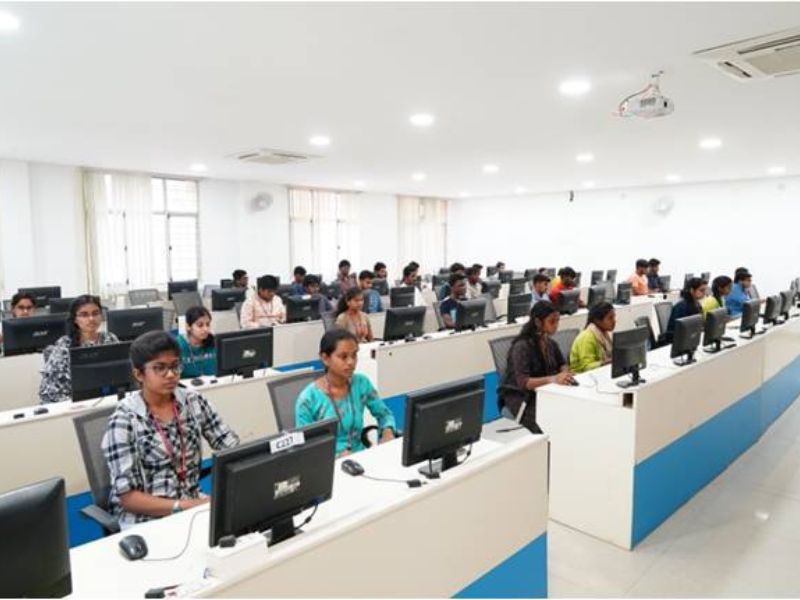
Computer lab -I
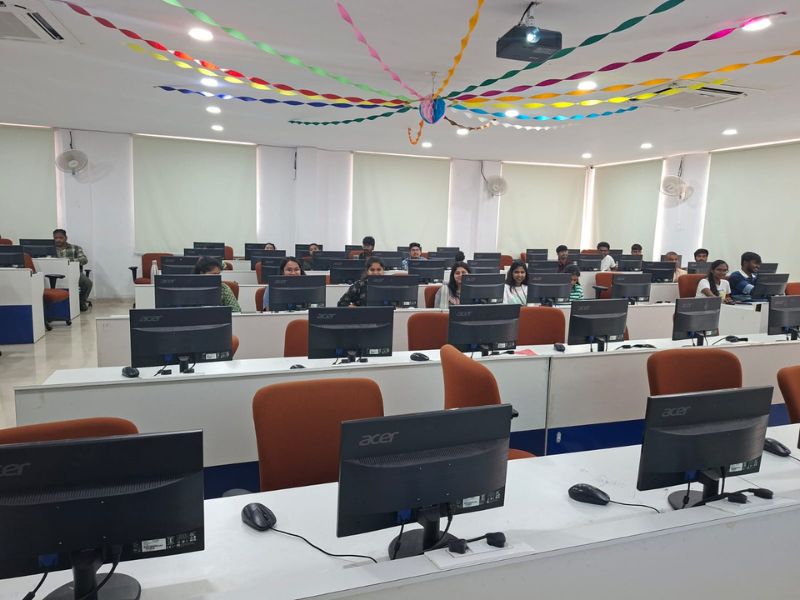
Computer lab - 3
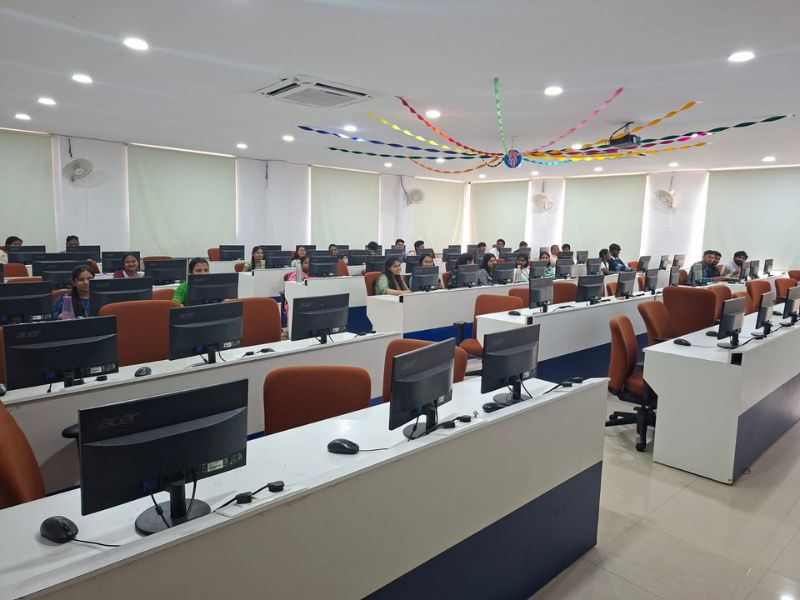
Computer lab - 2