
Organized by: Department of Electrical and Electronics Engineering (EEE), VJIT
Coordinator: Mr. M. Vijay Kumar
Head of the Department: Dr. C. N. Ravi
The Department of Electrical and Electronics Engineering (EEE), Vidya Jyothi Institute of Technology (VJIT), successfully conducted a 3-Day Robotics and Drone Workshop in collaboration with EPIT Research Labs Pvt. Ltd., Hyderabad, from 20th to 22nd April 2026.
The workshop aimed to provide students with hands-on exposure to emerging technologies and bridge the gap between theoretical knowledge and real-world applications. A total of 34 second-year EEE students actively participated, demonstrating great enthusiasm and engagement throughout the program.
The workshop covered key domains such as robotics fundamentals and drone technology, focusing on microcontroller interfacing, sensor integration, motor control, and drone working principles. The program combined classroom sessions, laboratory training, and live demonstrations, ensuring a comprehensive learning experience.
Classroom Sessions & Orientation
The workshop began with structured classroom sessions designed to build a strong conceptual foundation. Topics were explained in a clear and systematic manner, including:
- Fundamentals of robotic systems
- Working principles of sensors and actuators
- Basics of drone design and operation
- Introduction to ESP32 microcontrollers
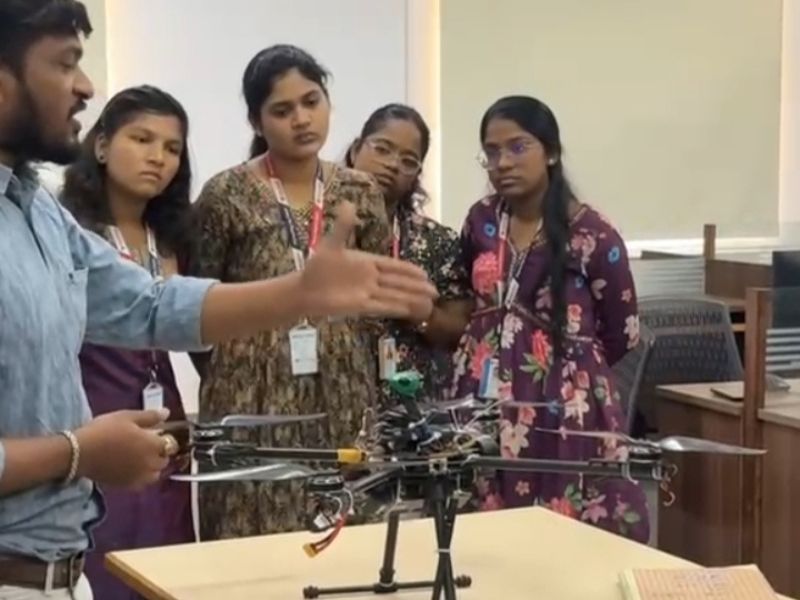
Special emphasis was placed on ESP32, highlighting its features, pin configuration, and role in controlling robotic and drone systems. Trainers used visual aids, real-time examples, and interactive discussions to make sessions engaging.
Students were encouraged to participate actively, ask questions, and connect theoretical concepts with real-world applications. These sessions played a crucial role in preparing participants for practical implementation.
Hands-on Training Sessions
The laboratory sessions provided students with practical exposure to building and operating robotic and drone systems. Participants:
- Configured hardware components and established connections
- Worked with sensors, motors, and controllers
- Performed programming tasks using the ESP32 platform
- Uploaded code, tested outputs, and debugged errors
Students gained insight into system integration and real-time behavior of components. Collaborative learning was encouraged through group activities, where students discussed solutions and solved challenges together.
These sessions significantly enhanced their technical confidence, problem-solving skills, and practical understanding.
Technical Demonstrations
The technical demonstrations offered deeper insights into advanced robotic and drone systems. Key highlights included:
- Live demonstrations of integrated systems such as propulsion units and control boards
- AI-based robotic arm controlled through gestures and programmed inputs
- Understanding intelligent algorithms for movement precision and adaptability
Students observed how AI-enabled systems improve accuracy and responsiveness in robotics. The demonstrations also covered synchronization, calibration, and challenges in real-time implementation.
These sessions helped students visualize modern advancements in robotics and intelligent control systems.
Workshop Highlights (Outdoor Demonstrations)
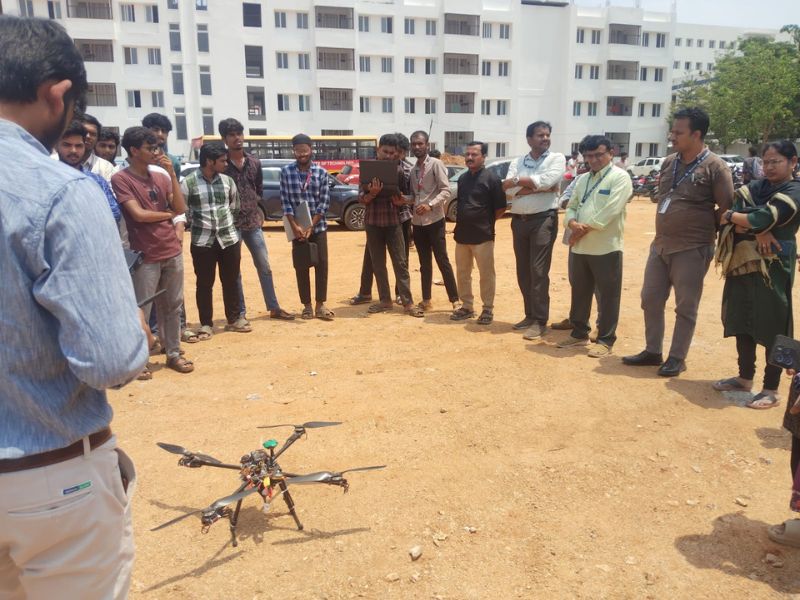
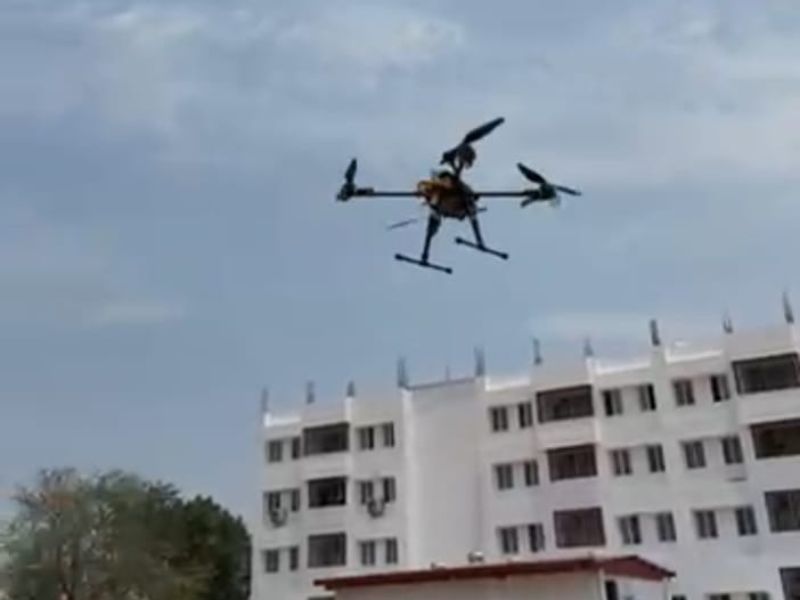
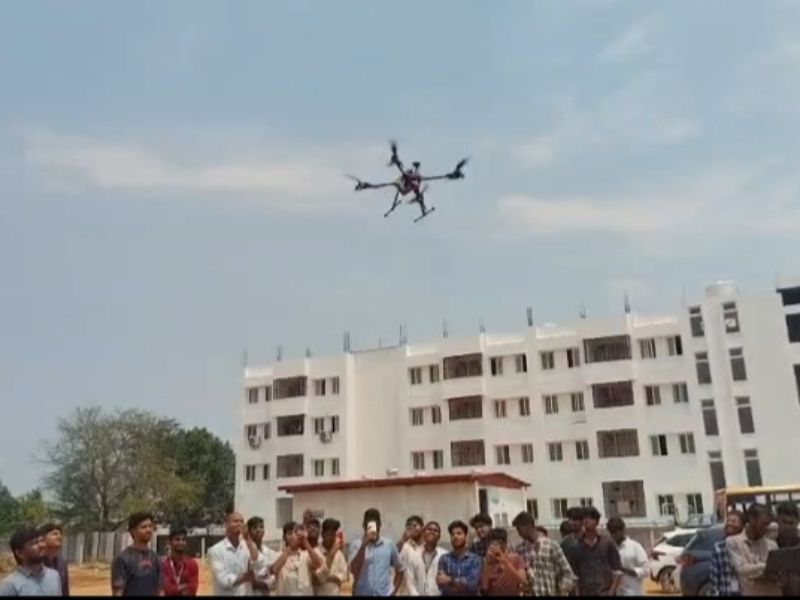
One of the most exciting segments of the workshop was the outdoor drone demonstration. Students witnessed:
- Drone assembly and calibration
- Pre-flight system checks
- Flight path programming and waypoint navigation
- Drone movements such as take-off, hovering, and landing
Trainers explained path planning and controlled navigation, giving students a clear understanding of real-world drone operations. The session also showcased applications of drones in:
- Surveillance
- Agriculture
- Mapping and surveying
These demonstrations effectively connected theoretical knowledge with practical implementation.
Conclusion
The workshop concluded successfully with enthusiastic participation from students. It served as an excellent platform to bridge academic learning with industry exposure.
Participants gained valuable knowledge in robotics and drone technology, enhancing both their theoretical understanding and hands-on skills. The interactive sessions, practical training, and demonstrations significantly enriched their learning experience.
The Department of EEE extends its sincere gratitude to the Management of VJIT for their continuous support and to EPIT Research Labs Pvt. Ltd. for their valuable collaboration.
The department looks forward to organizing more such industry-oriented programs in the future.








0 Comments