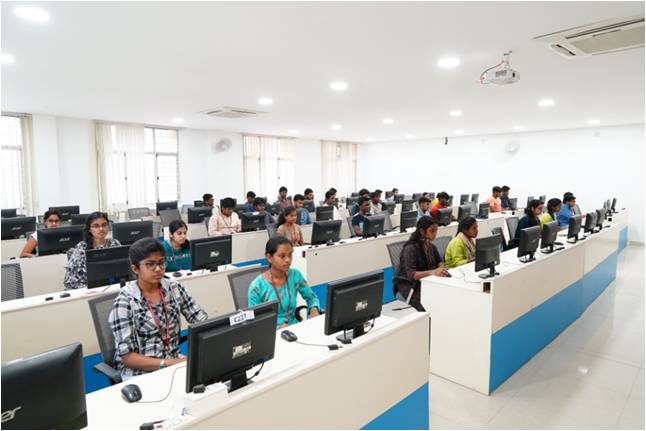
Infrastructure
Infrastructure
Laboratories
PPS - I, I Yr-I Sem
Outcome of the Lab: Students will gain the ability to solve problems using a structured programming approach. They will learn the fundamentals of programming, understand and apply various control statements, effectively use arrays and functions, and implement basic searching and sorting algorithms using the C programming language. This practical exposure strengthens their logical thinking and builds a strong foundation for advanced programming skills.
I Yr –II SEM Python Programming lab
Outcome of the Lab: Students will develop the ability to write and execute programs using Python while strengthening their logical thinking and problem-solving skills. Through hands-on practice, they will become familiar with fundamental programming constructs and learn how to apply them to solve real-world problems. The lab experience also encourages students to write modular and efficient code using structured and object-oriented programming techniques.
II Yr-I SEM Data Structure Lab
Outcome of the Lab:Students will gain hands-on experience in writing programs involving trees, graphs, and hashing techniques. They will learn how to implement and apply these data structures to solve real-world problems efficiently. This practical understanding enhances their ability to design optimized solutions and prepares them for advanced topics in computer science and software development.
II Yr I Sem-Data Visualization Through R-Programming
Outcome of the Lab:By the end of the course, students will be able to confidently write and execute R programs involving vectors, matrices, lists, and data frames. They will understand and apply control structures, iterative logic, user-defined functions, and recursion. Students will also gain practical experience in using R packages, performing statistical operations, handling factors, and applying advanced functions like lapply(), sapply(), and split(). This lab equips learners with essential skills for data analysis and visualization, paving the way for deeper exploration into data science and analytics.
II Yr II Sem-Object Oriented Programming Through Java Lab
Outcome of the Lab:Upon successful completion of the lab, students will be able to develop and execute Java programs using object-oriented concepts effectively. They will gain practical knowledge in implementing class hierarchies, method overloading and overriding, and handling exceptions. Students will also be equipped to create multithreaded applications, perform file operations, develop GUI-based programs using AWT, and interact with databases using JDBC. This hands-on learning experience prepares students to design modular, efficient, and reusable Java applications suitable for industry needs.
II Yr II Sem -Skill Development Course On Node Js
Outcome of the Lab:By the end of this course, students will be able to design, develop, and deploy responsive and interactive full-stack web applications. They will acquire practical skills in frontend development using modern UI frameworks, validate user inputs using JavaScript, and manage backend operations using Java, Node.js, and databases. Additionally, students will gain expertise in building and consuming RESTful APIs, managing user sessions securely, and implementing component-based frontends using React. These skills prepare students for roles such as Full Stack Developer, Backend Developer, or Web Application Developer in today’s tech-driven industry.
III Yr I Sem Skill Development Course (UI Design-Flutter)
Outcome of the Lab: Upon successful completion of the lab, students will be able to build and deploy cross-platform mobile applications using Flutter. They will develop a strong foundation in Dart programming, understand UI widget hierarchies, implement user interactions, manage form inputs, and create animated and event-driven interfaces. This practical experience equips students with the core skills necessary for roles such as Flutter Developer, Mobile App UI Designer, or Cross-platform App Developer, making them industry-ready for the growing mobile application development sector.
III Yr II Sem Data Warehousing And Data Mining Lab
Outcome of the Lab: By the end of the course, students will be able to implement key data mining algorithms and preprocessing techniques on real-world datasets using tools like WEKA and Python. They will be capable of analyzing and interpreting patterns using association rules, making predictions using classification models, segmenting data using clustering methods, and performing regression analysis. This hands-on exposure prepares students to solve practical problems in data analytics and equips them for careers in data science, business intelligence, and machine learning.
IV Yr I Sem Big Data Analytics Lab
Outcome of the Lab: By the end of this lab, students will be proficient in performing file system operations on HDFS, writing and executing MapReduce programs, and working with Pig Latin scripts for data transformation tasks. They will also gain the ability to use Hive for querying and managing structured data using SQL-like language and understand optimization techniques such as partitioning and bucketing. Through hands-on exposure to Big Data frameworks, students will be equipped with the essential skills to handle real-time data processing challenges, preparing them for roles such as Big Data Engineer, Data Analyst, or Hadoop Developer in today’s data-driven industry.
IV Yr I Sem Fundamentals Of Machine Learning Lab
Outcome of the Lab: By the end of this lab, students will be able to implement, experiment with, and evaluate fundamental machine learning algorithms across various paradigms including supervised learning, unsupervised learning, and probabilistic reasoning. They will acquire the ability to preprocess and analyze data, build classification models, apply clustering techniques, and assess model performance. This lab builds a strong practical foundation in machine learning, preparing students for advanced coursework, research, or careers in AI, data analytics, and intelligent systems.
IV Yr I Sem Deep Learning Lab
Outcome of the Lab:By the end of this lab, students will be able to design and implement deep learning models using industry-standard libraries and tools. They will gain expertise in building neural networks from scratch, performing sentiment analysis, language modelling, and applying transfer learning for image classification tasks. Students will also be able to evaluate and compare the performance of multiple pre-trained deep learning models on real datasets. This lab prepares students for careers in AI/ML Engineering, Data Science, Computer Vision, and Natural Language Processing, aligning their skills with current industry needs in deep learning and artificial intelligence.
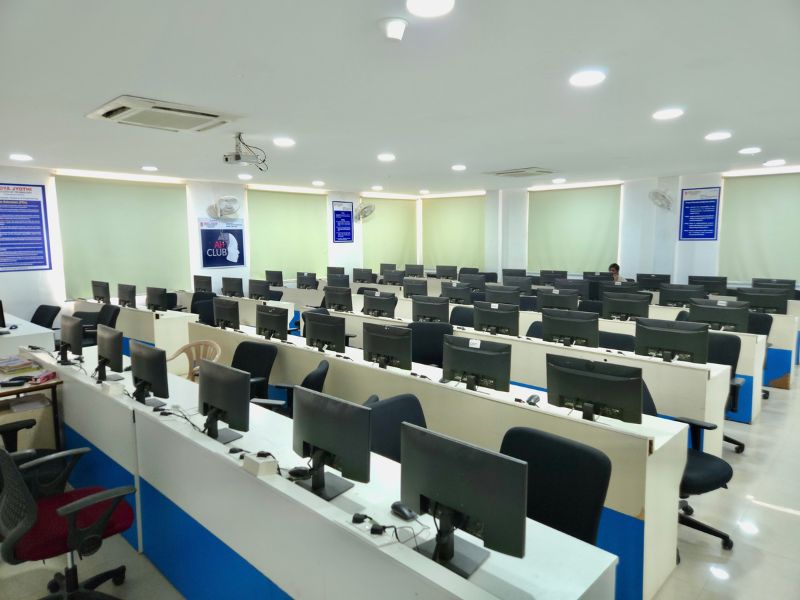
Computer lab -I
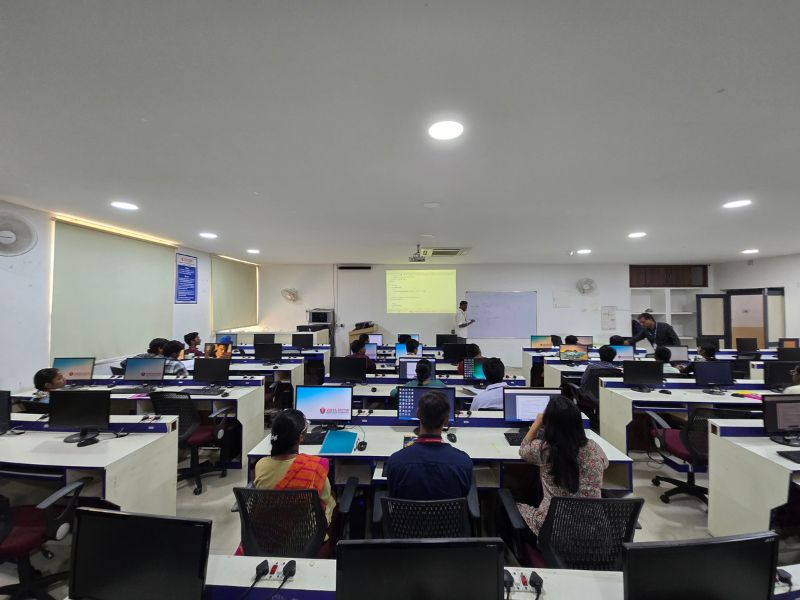
Computer lab - 3
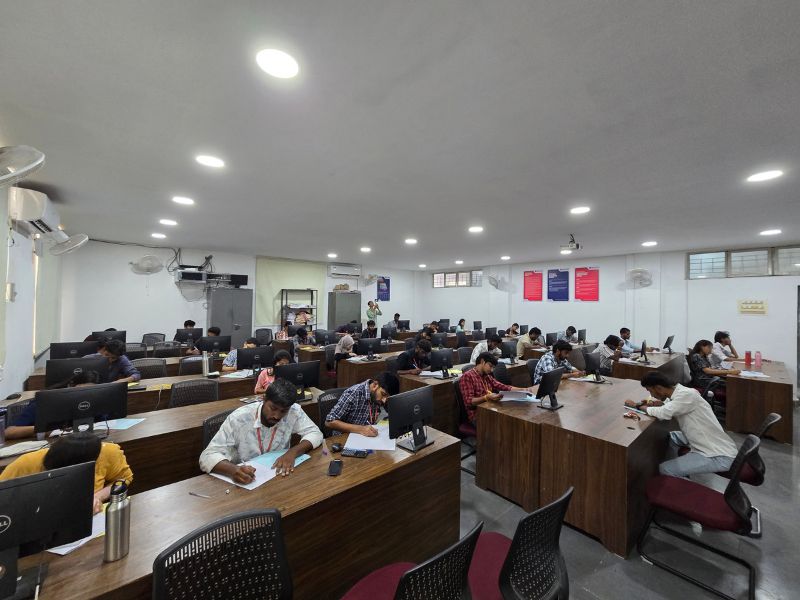
Computer lab - 5
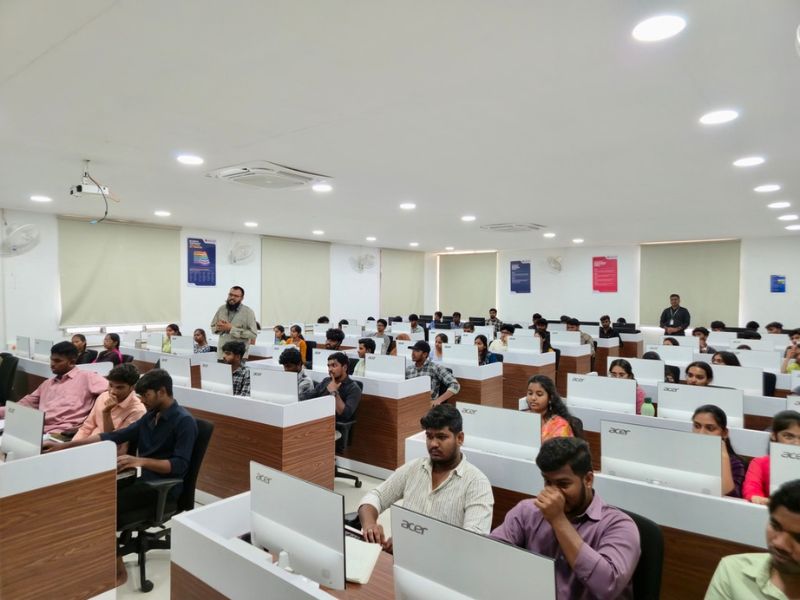
Computer lab - 2
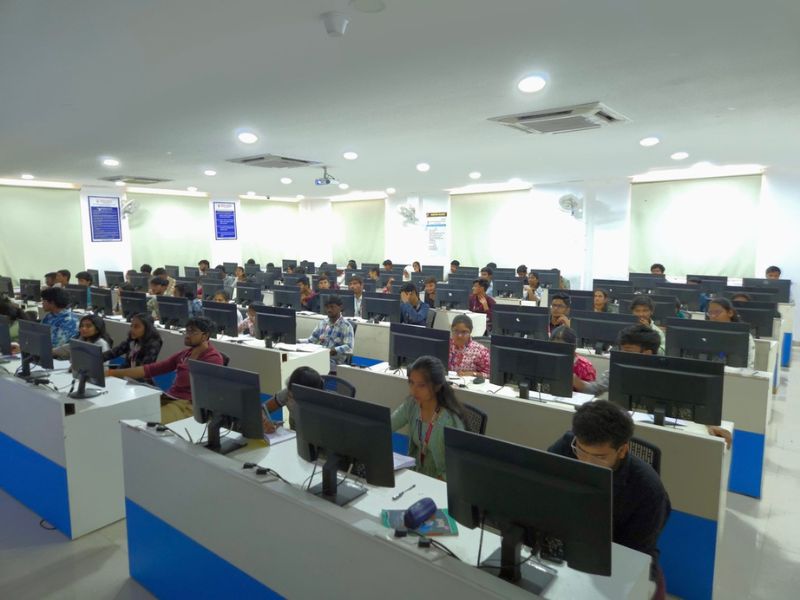
Computer lab -4