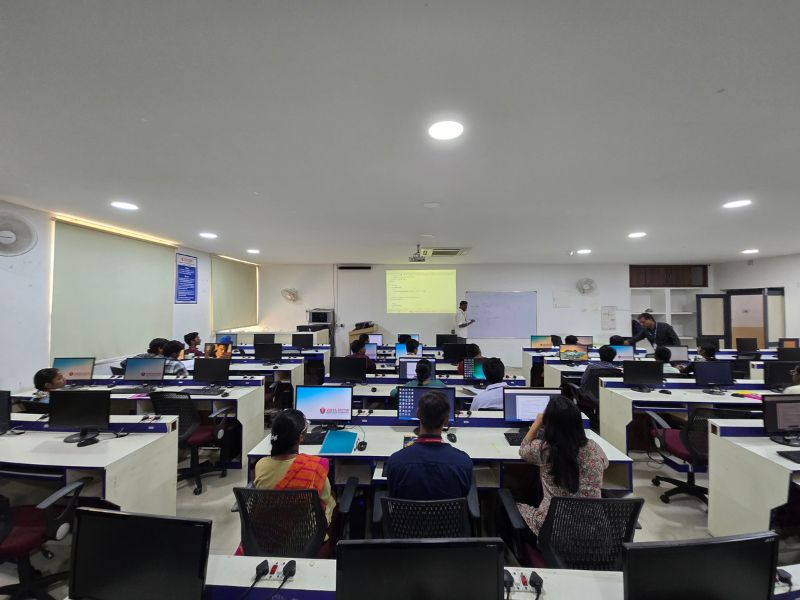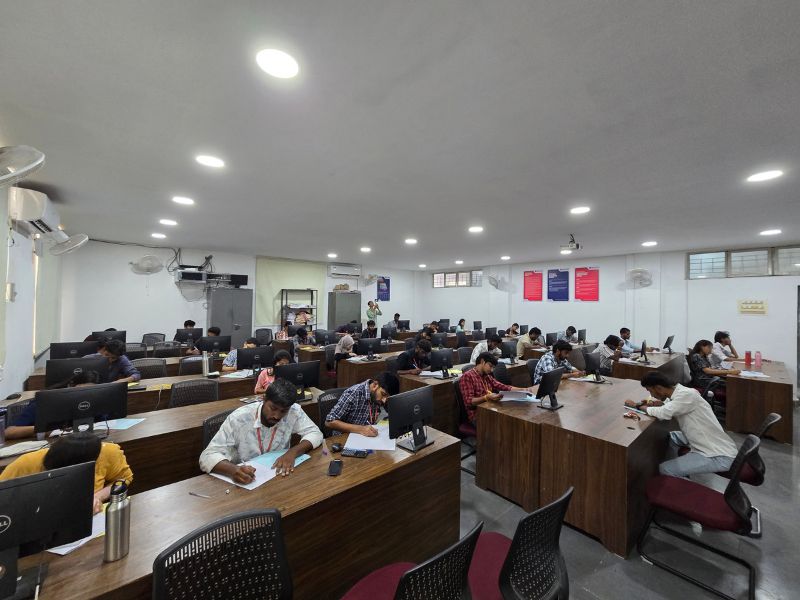
Infrastructure

Infrastructure

The Department of Computer Science & Engineering has started its UG Program B.Tech(CSE)from the year 1999 with an intake of 40. At present the department has expanded to 240. M.Tech(CSE) was started in the year 2011 with an intake of 18. B.Tech(CSE) program first accredited by NBA in 2011. Later B.Tech(CSE) reaccredited in 2018. Presently the program is accredited by NBA under Tier-1 from 2022 for a period of three years. The Department of CSE is a hub of activities with students having the opportunity to truly engage themselves in active learning through effective participation in Workshops, Seminars, Certification Programs, Hackathons, Tech-Fests, and R&D initiatives. To enhance the knowledge levels of students through self learning the department has various Technical Clubs. The department focuses on students to advance, evolve and enhance Computer Science and Engineering fundamentals to build the intellectual capital of the society. We have consistently placed 90% of our students year by year. It leaves no stone unturned for creating seasoned engineers. Focus on research, hands-on learning approach and a team of expert faculty has created a reputation for the Department as one of the best for Computer Science and Engineering.

Laboratories

PPS - I, I Yr-I Sem
Description: Programming for Problem Solving – I (PPS-I) is a foundational course designed to introduce students to the world of programming and logical thinking. Tailored for beginners, this course helps learners build essential problem-solving skills using the C programming language, which is widely recognized for its simplicity and effectiveness. The course covers key programming concepts such as variables, control structures, loops, functions, and arrays, along with basic searching and sorting algorithms. With a strong emphasis on hands-on practice using various coding platforms, PPS-I encourages students to think analytically and develop a solid foundation in programming. It serves as an excellent starting point for anyone aspiring to pursue a career in software development, engineering, or any technology-driven field.

Outcome of the Lab: Students will gain the ability to solve problems using a structured programming approach. They will learn the fundamentals of programming, understand and apply various control statements, effectively use arrays and functions, and implement basic searching and sorting algorithms using the C programming language. This practical exposure strengthens their logical thinking and builds a strong foundation for advanced programming skills.

List of Experiments

I Yr –II SEM Python Programming lab
Description: Python is a high-level, interpreted programming language known for its simplicity and versatility. It enables students to focus on building logic and solving problems efficiently, while the language itself handles many complex programming tasks behind the scenes. Python supports a clean and readable coding style, making it an ideal choice for beginners as well as advanced programmers. It encourages an application-oriented approach to learning programming through practical implementation and problem solving.

Outcome of the Lab: Students will develop the ability to write and execute programs using Python while strengthening their logical thinking and problem-solving skills. Through hands-on practice, they will become familiar with fundamental programming constructs and learn how to apply them to solve real-world problems. The lab experience also encourages students to write modular and efficient code using structured and object-oriented programming techniques.

List of Experiments

II Yr-I SEM Data Structure Lab
Description: This lab focuses on key concepts in Data Structures, including linked lists, trees, graphs, and hashing techniques. These structures form the backbone of efficient algorithm design and are essential for solving complex computational problems. The lab provides students with practical exposure to implementing and manipulating these data structures, helping them understand how data can be organized and accessed effectively.

Outcome of the Lab:Students will gain hands-on experience in writing programs involving trees, graphs, and hashing techniques. They will learn how to implement and apply these data structures to solve real-world problems efficiently. This practical understanding enhances their ability to design optimized solutions and prepares them for advanced topics in computer science and software development.

List of Experiments

II Yr I Sem-Data Visualization Through R-Programming
Description:This lab introduces students to the fundamentals of data handling and visualization using R programming, a powerful language widely used for statistical computing and data analysis. Through a progressive series of hands-on programs, students learn to work with various data structures such as vectors, matrices, lists, and data frames. The lab also covers control flow mechanisms, functions, recursion, and built-in utilities like apply functions. As students advance, they gain exposure to statistical operations, factor handling, and basic data manipulation techniques, laying a strong foundation for data visualization and analytical thinking.

Outcome of the Lab:By the end of the course, students will be able to confidently write and execute R programs involving vectors, matrices, lists, and data frames. They will understand and apply control structures, iterative logic, user-defined functions, and recursion. Students will also gain practical experience in using R packages, performing statistical operations, handling factors, and applying advanced functions like lapply(), sapply(), and split(). This lab equips learners with essential skills for data analysis and visualization, paving the way for deeper exploration into data science and analytics.

List of Lab Experiments

II Yr II Sem-Object Oriented Programming Through Java Lab
Description:This lab is designed to provide hands-on experience with object-oriented programming (OOP) concepts using the Java programming language. The course emphasizes practical implementation of key OOP principles such as encapsulation, inheritance, polymorphism, and abstraction. Students work on a wide range of programs that cover fundamental and advanced Java features including classes and objects, method and constructor overloading, inheritance types, exception handling, multithreading, string manipulation, file I/O, event handling, GUI development using AWT, and database connectivity through JDBC. The lab sessions are structured to help students gradually build real-world programming skills and understand the power of Java in application development.

Outcome of the Lab:Upon successful completion of the lab, students will be able to develop and execute Java programs using object-oriented concepts effectively. They will gain practical knowledge in implementing class hierarchies, method overloading and overriding, and handling exceptions. Students will also be equipped to create multithreaded applications, perform file operations, develop GUI-based programs using AWT, and interact with databases using JDBC. This hands-on learning experience prepares students to design modular, efficient, and reusable Java applications suitable for industry needs.

List of Lab Experiments

II Yr II Sem -Skill Development Course On Node Js
Description:This skill-based lab course is designed to provide students with end-to-end practical exposure to modern full-stack web development using Node.js and related technologies. The course integrates core concepts of frontend and backend development, emphasizing responsive design, client-side scripting, server-side programming, database interaction, session management, and API integration. Students begin by building responsive web applications using HTML, CSS3, Flex, Grid, and Bootstrap, followed by JavaScript-based client-side validations. The course then progresses to developing dynamic server-side applications using servlets, JDBC, and session tracking mechanisms such as Cookies and Sessions. Students also explore Express.js for building RESTful APIs, integrate React for frontend development with routing, and create custom servers using Node.js core modules such as http, os, path, and events. This hands-on approach equips students with the technical skills and project-based experience required to meet current industry standards in web application development.

Outcome of the Lab:By the end of this course, students will be able to design, develop, and deploy responsive and interactive full-stack web applications. They will acquire practical skills in frontend development using modern UI frameworks, validate user inputs using JavaScript, and manage backend operations using Java, Node.js, and databases. Additionally, students will gain expertise in building and consuming RESTful APIs, managing user sessions securely, and implementing component-based frontends using React. These skills prepare students for roles such as Full Stack Developer, Backend Developer, or Web Application Developer in today’s tech-driven industry.

List of Lab Experiments

III Yr I Sem Skill Development Course (UI Design-Flutter)
Description: This skill development course is aimed at empowering students with hands-on experience in designing modern, cross-platform mobile user interfaces using Flutter, a popular open-source UI toolkit by Google. The course introduces students to the Flutter framework and Dart programming language, beginning with setup and basic syntax and gradually advancing toward interactive and visually appealing application development. Students work through real-world mobile UI components such as text fields, buttons, images, layouts, gestures, and form handling. By integrating object-oriented principles, gesture controls, animations, and calendars, learners gain the ability to create responsive, dynamic, and user-friendly mobile apps that work seamlessly across Android and iOS platforms. The course emphasizes practical implementation, preparing students to meet the demands of today’s mobile app development industry.

Outcome of the Lab: Upon successful completion of the lab, students will be able to build and deploy cross-platform mobile applications using Flutter. They will develop a strong foundation in Dart programming, understand UI widget hierarchies, implement user interactions, manage form inputs, and create animated and event-driven interfaces. This practical experience equips students with the core skills necessary for roles such as Flutter Developer, Mobile App UI Designer, or Cross-platform App Developer, making them industry-ready for the growing mobile application development sector.

List of Lab Experiments

III Yr II Sem Data Warehousing And Data Mining Lab
Description: This lab is designed to provide hands-on experience in the core techniques of data preprocessing, warehousing, and mining using industry-relevant tools such as WEKA, Python, and R. The course enables students to understand and apply data mining algorithms including association rule mining, classification, clustering, and regression on real-world datasets. It emphasizes the importance of data preprocessing techniques to handle noisy, incomplete, or inconsistent data—preparing it for meaningful analysis. Students work with popular algorithms like Apriori, FP-Growth, Decision Trees, Naïve Bayes, KNN, and K-Means, and also explore similarity measures and credit risk analysis. The lab fosters a practical understanding of how data mining models are built and evaluated to support decision-making in business, healthcare, finance, and other domains.

Outcome of the Lab: By the end of the course, students will be able to implement key data mining algorithms and preprocessing techniques on real-world datasets using tools like WEKA and Python. They will be capable of analyzing and interpreting patterns using association rules, making predictions using classification models, segmenting data using clustering methods, and performing regression analysis. This hands-on exposure prepares students to solve practical problems in data analytics and equips them for careers in data science, business intelligence, and machine learning.

List of Lab Experiments

IV Yr I Sem Big Data Analytics Lab
Description:This lab course is designed to provide students with practical experience in handling, processing, and analysing large-scale datasets using modern Big Data technologies. The course begins with core data structure implementation in Java and progresses toward the setup and execution of a Hadoop ecosystem in pseudo-distributed mode. Students gain hands-on experience with the Hadoop Distributed File System (HDFS), executing commands for file storage, retrieval, and management. The lab introduces MapReduce programming, enabling learners to process large volumes of semi-structured data, such as weather logs, using parallel processing techniques. In addition, students explore powerful Big Data tools including Pig, Hive, and HBase, which facilitate data manipulation, querying, transformation, and storage. The curriculum emphasizes real-world applications, encouraging students to analyze data using industry-standard platforms and scripting languages.

Outcome of the Lab: By the end of this lab, students will be proficient in performing file system operations on HDFS, writing and executing MapReduce programs, and working with Pig Latin scripts for data transformation tasks. They will also gain the ability to use Hive for querying and managing structured data using SQL-like language and understand optimization techniques such as partitioning and bucketing. Through hands-on exposure to Big Data frameworks, students will be equipped with the essential skills to handle real-time data processing challenges, preparing them for roles such as Big Data Engineer, Data Analyst, or Hadoop Developer in today’s data-driven industry.

List of Lab Experiments

IV Yr I Sem Fundamentals Of Machine Learning Lab
Description:This lab is structured to introduce students to foundational machine learning algorithms and concepts through practical implementation. It offers hands-on experience with essential techniques such as hypothesis finding, decision trees, neural networks, support vector machines (SVM), and clustering algorithms. Students will begin by exploring symbolic learning methods like FIND-S and Candidate Elimination before moving on to numeric approaches including entropy-based ID3, perceptron models, and support vector machines. The lab also includes experiments in locally weighted regression, Bayesian networks for medical diagnosis, and clustering algorithms such as Expectation-Maximization (EM) and k-Means. Through coding exercises and real-world datasets (e.g., Iris and Heart Disease datasets), students will gain practical insight into classification, regression, and probabilistic modelling. Tools like Python and data handling with CSV files are employed to simulate real-world ML workflows.

Outcome of the Lab: By the end of this lab, students will be able to implement, experiment with, and evaluate fundamental machine learning algorithms across various paradigms including supervised learning, unsupervised learning, and probabilistic reasoning. They will acquire the ability to preprocess and analyze data, build classification models, apply clustering techniques, and assess model performance. This lab builds a strong practical foundation in machine learning, preparing students for advanced coursework, research, or careers in AI, data analytics, and intelligent systems.

List of Lab Experiments

IV Yr I Sem Deep Learning Lab
Description:This lab is designed to provide hands-on experience in building, training, and evaluating deep learning models using popular frameworks such as TensorFlow, Keras, and PyTorch. Students start by implementing basic machine learning techniques like linear regression and progressively move towards constructing deep neural networks. The lab emphasizes practical understanding of Convolutional Neural Networks (CNNs) for image recognition, Recurrent Neural Networks (RNNs) and Long Short-Term Memory (LSTM) for sequential data and sentiment analysis, and Gated Recurrent Units (GRUs) for language modeling. Students will also explore advanced techniques like Transfer Learning and experiment with various pre-trained models such as GoogLeNet, VGGNet, AlexNet, ResNet, and Xception to evaluate model performance across different datasets. The course focuses on developing practical skills required for solving real-world problems in computer vision, natural language processing, and AI-driven analytics.

Outcome of the Lab:By the end of this lab, students will be able to design and implement deep learning models using industry-standard libraries and tools. They will gain expertise in building neural networks from scratch, performing sentiment analysis, language modelling, and applying transfer learning for image classification tasks. Students will also be able to evaluate and compare the performance of multiple pre-trained deep learning models on real datasets. This lab prepares students for careers in AI/ML Engineering, Data Science, Computer Vision, and Natural Language Processing, aligning their skills with current industry needs in deep learning and artificial intelligence.
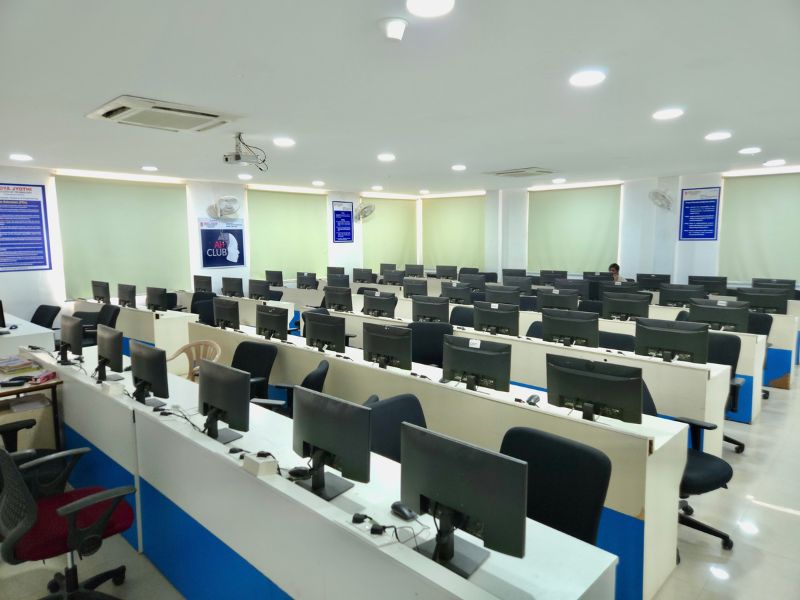
List of Lab Experiments

Computer lab -I

Computer lab - 3

Computer lab - 5
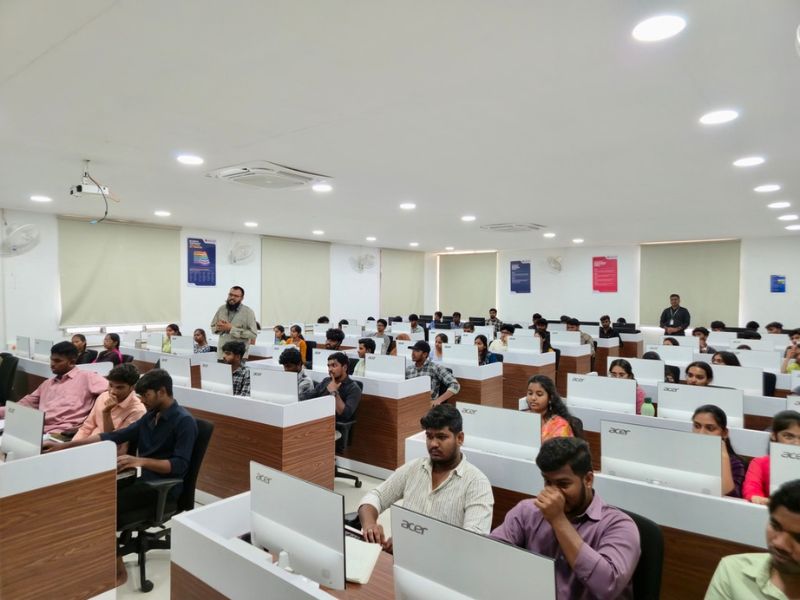
Computer lab - 2
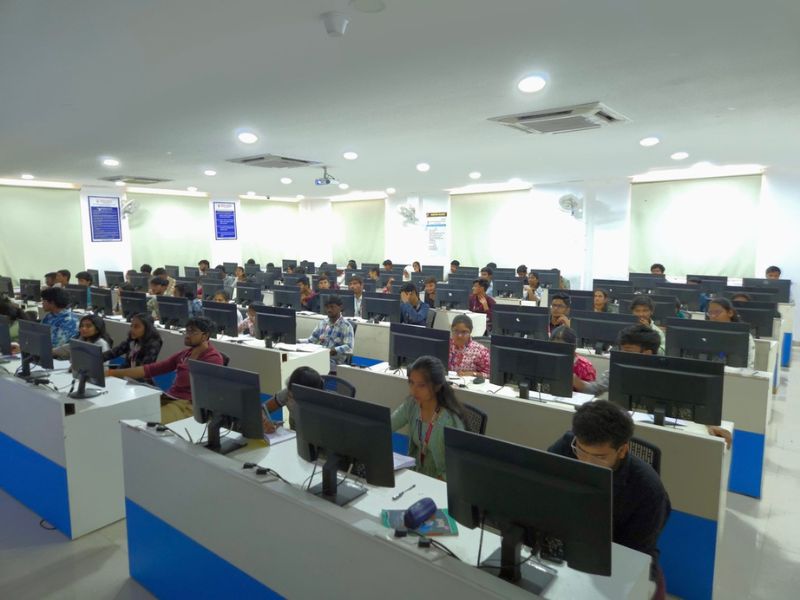
Computer lab -4
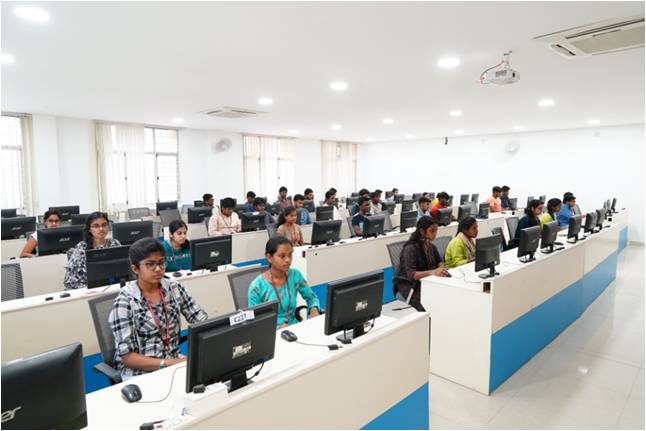
Computer lab - 6

Varsha Reddy Polla
Varsha Reddy Polla

Left us a 5 star review

Varsha Reddy Polla January 24, 2026
google

Ok

suresh Jammula January 9, 2026
google
Prakash Power (590) January 5, 2026
google
Radhakrishna T January 3, 2026
google

VJIT is just a average clg. Its neither bad nor good thats how i felt when i studied, factuality is good, supportive bit management isn't.

Srujan Kumar December 13, 2025
google
Sohaib-Khan December 2, 2025
google
Siri Mylarishetty November 21, 2025
google