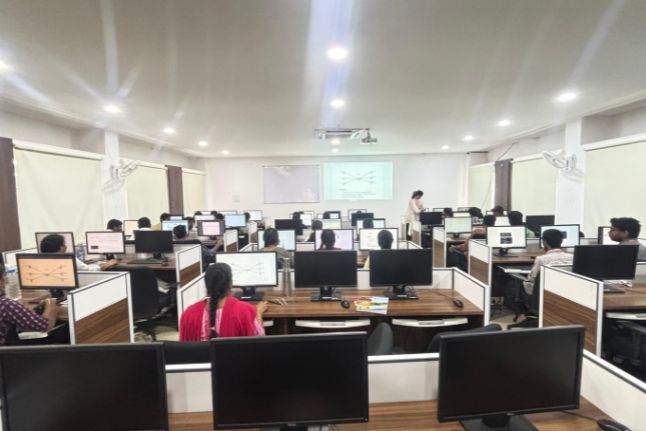
Infrastructure
Infrastructure
Laboratories
Programming for Problem Solving – I Year I Sem
Description: Programming for Problem Solving – I (PPS-I) is a foundational course designed to introduce students to the world of programming and logical thinking. Tailored for beginners, this course helps learners build essential problem-solving skills using the C programming language, which is widely recognized for its simplicity and effectiveness. The course covers key programming concepts such as variables, control structures, loops, functions, and arrays, along with basic searching and sorting algorithms. With a strong emphasis on hands-on practice using various coding platforms, PPS-I encourages students to think analytically and develop a solid foundation in programming. It serves as an excellent starting point for anyone aspiring to pursue a career in software development, engineering, or any technology-driven field.
Outcome of the Lab:Students will gain the ability to solve problems using a structured programming approach. They will learn the fundamentals of programming, understand and apply various control statements, effectively use arrays and functions, and implement basic searching and sorting algorithms using the C programming language. This practical exposure strengthens their logical thinking and builds a strong foundation for advanced programming skills.
Python Programming Lab – I Year II Sem
Description: Python is a high-level, interpreted programming language known for its simplicity and versatility. It enables students to focus on building logic and solving problems efficiently, while the language itself handles many complex programming tasks behind the scenes. Python supports a clean and readable coding style, making it an ideal choice for beginners as well as advanced programmers. It encourages an application-oriented approach to learning programming through practical implementation and problem solving.
Outcome of the Lab:Students will develop the ability to write and execute programs using Python while strengthening their logical thinking and problem-solving skills. Through hands-on practice, they will become familiar with fundamental programming constructs and learn how to apply them to solve real-world problems. The lab experience also encourages students to write modular and efficient code using structured and object-oriented programming techniques.
Data Structure Lab II Year I Sem
Description: Data Structures is a core course designed to introduce students to efficient techniques for organizing, storing, and managing data for problem solving. Tailored for learners with basic programming knowledge, this course strengthens logical and analytical thinking by focusing on the selection and implementation of appropriate data structures. The course covers fundamental linear and non-linear data structures such as arrays, stacks, queues, linked lists, trees, graphs, and hashing techniques, along with searching and sorting algorithms. With a strong emphasis on conceptual understanding and practical implementation using the C programming language, the course prepares students to develop efficient and scalable solutions. It serves as a vital foundation for advanced studies in algorithms, databases, operating systems, and software development.
Outcome of the Course: Students will gain the ability to solve complex problems by selecting and applying suitable data structures and algorithms. They will understand and implement linear and non-linear data structures, perform tree and graph traversals, and apply hashing techniques for efficient data retrieval. Students will also develop skills in analyzing algorithm efficiency and designing optimized solutions using the C programming language. This course strengthens problem-solving abilities and builds a strong foundation for advanced programming and software development.
OS - I, II Year I Sem
Description: Operating Systems is a core course designed to introduce students to the principles and functioning of modern operating systems. Tailored for students with basic programming knowledge, this course focuses on understanding how operating systems manage system resources and provide efficient services to users and applications. The course covers key concepts such as process management, CPU scheduling, deadlocks, memory management, file systems, and input/output management. It also introduces UNIX/Linux operating systems and system calls, enabling students to understand low-level system operations. With a balance of theoretical concepts and practical exposure, this course builds a strong foundation for system-level programming and advanced computing studies.
Outcome of the Course: Students will gain the ability to understand and apply core operating system concepts such as process scheduling, deadlock handling, memory management, and file management. They will be able to write C programs using UNIX/Linux system calls and analyze the working of operating system services. Students will also develop a comprehensive understanding of page replacement algorithms and resource management techniques. This course enhances analytical thinking and prepares students for advanced topics in system software, distributed systems, and operating system design.
SDC - Django, II Year I Sem
Description: Web Application Development is a practical-oriented course designed to introduce students to the fundamentals of building dynamic and interactive web applications. The course focuses on front-end technologies such as HTML, CSS, Bootstrap, and JavaScript to create responsive and user-friendly web interfaces. It also introduces backend development using the Django framework, enabling students to design server-side applications with database connectivity. Emphasis is given to form handling, cookies, and administrative interfaces, helping students understand real-world web application development. This course provides essential skills required for modern web and software development.
Outcome of the Course: Students will gain the ability to design and develop responsive web pages using HTML, CSS, Bootstrap, and basic JavaScript. They will understand and apply advanced JavaScript concepts and learn database connectivity using JDBC. Students will also be able to design and implement Django-based web applications with features such as form handling, cookies, and admin pages. This course strengthens practical web development skills and prepares students for advanced full-stack application development.
DBMS , II Year II Sem
Description: Database Management Systems Lab is a practical-oriented course designed to provide hands-on experience in designing, implementing, and managing databases. The course focuses on understanding relational database concepts and applying Structured Query Language (SQL) for data definition, manipulation, and control. Students gain practical exposure to creating and managing database schemas, applying integrity constraints, and implementing security and authorization mechanisms. The lab also introduces procedural extensions of SQL such as PL/SQL for developing database programs including procedures, functions, cursors, and triggers. This course builds a strong foundation for database application development and data-driven systems.
Outcome of the Course: Students will gain the ability to create, manipulate, and manage databases using SQL commands such as DDL, DML, DCL, and TCL. They will be able to apply various integrity constraints to ensure database consistency and security. Students will also design and implement PL/SQL programs including procedures, functions, cursors, and triggers for effective database application development. This practical exposure enhances database design skills and prepares students for advanced studies in data management and software development.
OOAD , II Year II Sem
Description: Object Oriented Analysis and Design (OOAD) Lab is designed to provide practical knowledge of software analysis and design using object-oriented principles and Unified Modeling Language (UML). This lab enables students to understand how to analyze system requirements and represent them using various UML diagrams such as use case diagrams, class diagrams, sequence diagrams, activity diagrams, state diagrams, and collaboration diagrams. Students will learn how to design software systems by identifying objects, relationships, and interactions among system components. The course also introduces software design principles and modeling tools that help in developing well-structured and maintainable software systems. Through practical exercises, students gain experience in modeling real-world problems using object-oriented techniques.
Outcome of the Course: Students will be able to analyze system requirements and represent them using appropriate UML diagrams. They will develop the ability to design object-oriented models including classes, objects, and relationships for software systems. Students will also learn to apply software design principles and use modeling tools for creating different UML diagrams such as use case, class, sequence, activity, and state diagrams. This practical knowledge helps students in understanding the complete software development process from requirement analysis to system design.
Prolog , II Year II Sem
Description: Prolog Lab is designed to provide practical knowledge of logic programming using the Prolog language. This lab enables students to understand how to represent problems using facts, rules, and queries. Students learn to solve problems using logical reasoning, recursion, and backtracking techniques.
The course focuses on knowledge representation, pattern matching, and symbolic computation. It also introduces concepts used in artificial intelligence, helping students to develop programs for problem-solving and decision-making. Through practical exercises, students gain hands-on experience in implementing real-world problems using logic programming techniques.
Outcome of the Course: After completing this course, students will be able to:
- Understand the fundamentals of logic programming and Prolog syntax.
- Represent problems using facts, rules, and queries in Prolog.
- Apply recursion and backtracking techniques to solve problems.
- Develop programs for list processing and symbolic reasoning.
- Implement simple AI-based applications using Prolog.
- Analyze and debug Prolog programs effectively.
CN, III Year I Sem
Description: Computer Networks Lab is designed to provide practical knowledge of networking concepts and protocols. This lab enables students to understand the fundamentals of data communication, network models, and transmission techniques. Students gain hands-on experience in configuring networks, analyzing protocols, and simulating network environments.
The course focuses on important networking concepts such as the OSI and TCP/IP models, IP addressing, routing, error detection, flow control, and socket programming. Students will also work with network simulation tools to design and analyze network performance. Through practical exercises, students develop skills required to build, manage, and troubleshoot computer networks.
Outcome of the Course: After completing this course, students will be able to understand basic networking concepts and communication models. They will develop the ability to configure and analyze different network protocols and perform IP addressing and subnetting. Students will also gain practical skills in implementing client-server communication using socket programming. Furthermore, they will learn to use simulation tools to design and analyze network performance. This knowledge will enable them to identify and troubleshoot common network issues effectively.
MLP, III Year I Sem
Description: Machine Learning Using Python Lab is designed to provide practical knowledge of machine learning concepts and their implementation using Python. This lab enables students to understand how to analyze data, build predictive models, and evaluate their performance. Students gain hands-on experience with popular Python libraries such as NumPy, Pandas, Matplotlib, and Scikit-learn.
The course focuses on data preprocessing, feature selection, supervised and unsupervised learning algorithms, and model evaluation techniques. Students will implement algorithms such as linear regression, logistic regression, decision trees, clustering, and classification models. Through practical exercises, students develop skills to solve real-world problems using machine learning techniques.
Outcome of the Course: After completing this course, students will be able to understand the fundamentals of machine learning and data analysis. They will develop the ability to preprocess data and apply appropriate machine learning algorithms. Students will gain hands-on experience in building and evaluating predictive models using Python libraries. They will also learn to apply supervised and unsupervised learning techniques to real-world problems. This practical knowledge helps students in developing intelligent systems and data-driven solutions.
SDC-UI Design- Flutter, III Year I Sem
Description: Skill Development Course on UI Design using Flutter is designed to provide practical knowledge of building modern, responsive, and user-friendly mobile applications. This course introduces students to the Flutter framework and Dart programming language for developing cross-platform applications.
Students learn to design intuitive user interfaces using widgets, layouts, and navigation techniques. The course focuses on UI/UX principles, responsive design, theming, and basic state management. Through hands-on practice, students gain experience in developing visually appealing and interactive mobile applications. This course helps students build real-world skills required for mobile app development.
Outcome of the Course: After completing this course, students will be able to understand the fundamentals of Flutter and UI design principles. They will develop the ability to create responsive and interactive user interfaces using Flutter widgets and layouts. Students will gain hands-on experience in designing mobile applications with proper navigation and theming. They will also learn basic state management techniques to handle dynamic data in applications. This practical knowledge enables students to develop modern cross-platform mobile applications effectively.
List of Experiments
DA, III Year II Sem
Outcome of the Course: The course focuses on data preprocessing, exploratory data analysis (EDA), statistical analysis, and data visualization techniques. Students will learn to work with real-world datasets, identify patterns, and derive insights to support decision-making. Through practical exercises, students develop skills required for data-driven problem solving.
AEC, III Year II Sem
Description:Advanced English Communication Skills Lab is designed to enhance students’ proficiency in English communication for academic and professional contexts. This lab focuses on developing advanced speaking, listening, reading, and writing skills required for effective communication.
Students engage in activities such as group discussions, presentations, debates, role plays, and interviews to improve their fluency, confidence, and clarity of expression. The course also emphasizes pronunciation, vocabulary building, and grammar usage. Through practical sessions, students develop the ability to communicate ideas effectively in both formal and informal situations.
Outcomes
After completing this course, students will be able to communicate effectively in English with improved fluency and confidence. They will develop strong speaking and listening skills required for academic and professional interactions. Students will gain the ability to participate in group discussions, deliver presentations, and perform well in interviews. They will also improve their vocabulary, pronunciation, and grammatical accuracy. This practical knowledge helps students enhance their overall personality and communication skills.
DL, IV Year I Sem
Description:Deep Learning Lab is designed to provide practical knowledge of deep learning techniques and their implementation using Python. This lab enables students to understand neural networks and how they are used to solve complex problems in areas such as image processing, speech recognition, and natural language processing.
Students gain hands-on experience with deep learning frameworks such as TensorFlow and Keras. The course focuses on concepts such as artificial neural networks, convolutional neural networks (CNNs), recurrent neural networks (RNNs), and model optimization techniques. Through practical exercises, students develop skills to build, train, and evaluate deep learning models for real-world applications.
Outcome of the Course: After completing this course, students will be able to understand the fundamentals of deep learning and neural networks. They will develop the ability to design and implement deep learning models using appropriate frameworks. Students will gain hands-on experience in training and evaluating models for various applications. They will also learn to apply CNNs and RNNs for image and sequence data analysis. This practical knowledge enables students to develop intelligent systems using deep learning techniques.
FSD, IV Year I Sem
Description: Full Stack Development Lab is designed to provide practical knowledge of developing dynamic web applications using both front-end and back-end technologies. This lab enables students to understand how to build complete web applications by integrating user interfaces with server-side logic and databases.
Students gain hands-on experience in technologies such as HTML, CSS, JavaScript, and frameworks for front-end development, along with back-end technologies like Node.js, Django, or similar platforms. The course focuses on creating responsive web pages, handling client-server communication, and performing database operations. Through practical exercises, students develop skills required to design, develop, and deploy full-stack web applications.
Outcome of the Course: After completing this course, students will be able to understand the fundamentals of full stack development and web technologies. They will develop the ability to design responsive user interfaces using front-end technologies. Students will gain hands-on experience in implementing server-side logic and integrating databases. They will also learn to build and deploy complete web applications. This practical knowledge enables students to develop scalable and user-friendly web solutions.
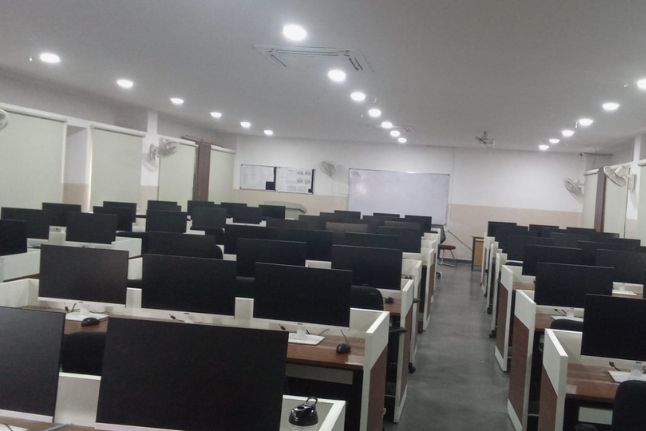
CSE-AIML Lab-I
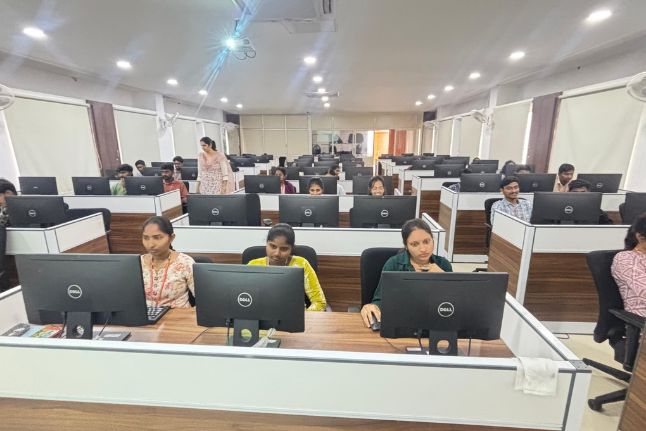
CSE-AIML Lab- 3
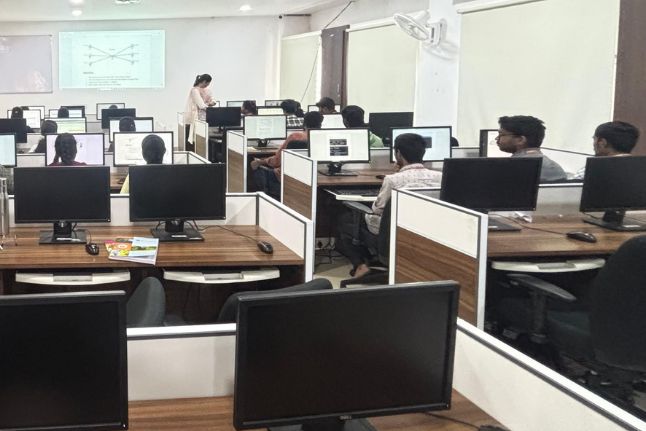
CSE-AIML Lab- 5
CSE-AIML Lab- 2
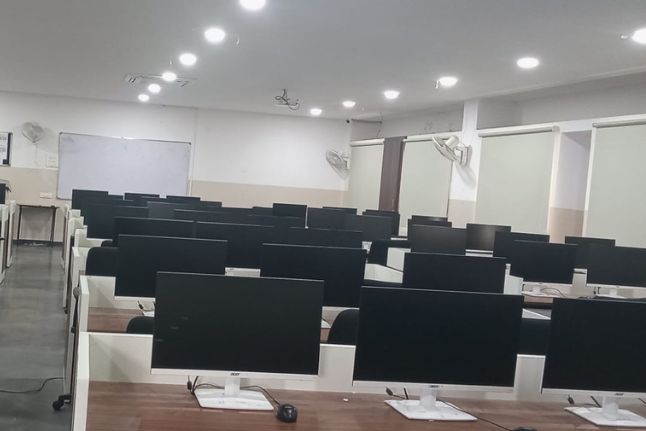
CSE-AIML Lab-4